Translate this page:
Summary
This western subspecies of pipsissewa occupies similar cool, montane forest habitats and shares the same practical profile: a small evergreen understory plant used chiefly for bitter teas and traditional flavoring rather than as food. In the Southwest it occurs in mountain woodlands, often under pine and mixed conifers, and spreads slowly via rhizomes. Like the acuta form, it is botanically distinctive, chemically “medicinal” in character, and of minimal food value. Where it differs is mainly in subtle leaf-tip traits, which are not always consistent enough to matter to foragers [2-3].
Physical Characteristics

 Chimaphila umbellata ssp. occidentalis is an evergreen Shrub growing to 0.3 m (1ft) by 0.3 m (1ft in) at a slow rate.
See above for USDA hardiness. It is hardy to UK zone 4. The flowers are pollinated by Bees, Insects.
It is noted for attracting wildlife.
Suitable for: light (sandy), medium (loamy) and heavy (clay) soils and prefers well-drained soil. Suitable pH: mildly acid and neutral soils and can grow in very acid soils.
It can grow in semi-shade (light woodland). It prefers moist soil.
UK Hardiness Map
US Hardiness Map
Synonyms
None
Plant Habitats
Edible Uses
Not a food plant. Leaves and rhizomes may be used sparingly for bitter teas or flavoring, but regular consumption in quantity is not advised. Harvest lightly, if at all, and treat it as a medicinal/flavor species [2-3]. Edible Uses & Rating: As with other pipsissewa forms, edibility is essentially limited to tiny amounts of leaf as a bitter flavoring and use of rhizomes/stems/leaves as a brewed infusion. It is not a practical edible green or carbohydrate source. As a “food,” it rates very low; as a flavor and cultural plant, it is interesting but still best treated as occasional and sparing [2-3]. Taste, Processing & Kitchen Notes: Taste is dominated by bitterness and a medicinal resinous character. Leaf infusions and rhizome teas tend to be earthy and bitter, sometimes with a faint wintergreen-like suggestion noted by some authors. They can contribute a distinctive undertone to complex herbal blends or traditional root beer-style mixtures. Sweetening can make the infusion more palatable, but it remains a bitter tonic rather than a pleasant everyday tea. Washing and careful straining help reduce soil flavors and sediment [2-3]. Seasonality (Phenology): Evergreen foliage persists year-round when conditions allow, with flowering generally in summer from June to September depending on elevation. Capsules can persist beyond flowering. Leaves are accessible for much of the year, but any harvest should be minimal due to the plant’s slow growth. Safety & Cautions (Food Use): Treat pipsissewa as a medicinal/flavor plant rather than a food. Large or frequent consumption is not appropriate. People who are pregnant, breastfeeding, have kidney concerns, or are sensitive to medicinal bitters should avoid internal use. Leaf extracts used commercially as flavoring are typically dosed far below the levels of strong homemade teas, so “generally safe as an additive” does not automatically translate to “safe as a beverage in quantity.” [2-3] Harvest & Processing Workflow: If using leaves, take only a few from an established patch, rinse well, and use sparingly in blends. If making a rhizome tea, use very small quantities, wash thoroughly, simmer briefly, strain, and consider sweetening only after brewing. Avoid rhizome harvest where possible because it damages colonies and reduces long-term persistence. In all cases, prioritize legality, sustainability, and moderation. Cultivar/Selection Notes: No meaningful cultivars for food use. Subspecies distinctions may be used in floras, but they do not materially change culinary value. Look-Alikes & Confusion Risks: Confusion is most likely with related Pyrola, Orthilia, or Moneses species, which tend to have more basal leaves and different flower arrangements. Spotted prince’s pine (Chimaphila maculata) is separated by conspicuous pale vein mottling. Chimaphila is generally distinctive once you note the evergreen leaves distributed along the stem and the nodding clustered flowers. Traditional / Indigenous Use Summary: Historically valued chiefly for medicinal-style uses and as a flavoring component in complex herbal beverages, including traditional root beer-style preparations. Food use is minimal; the plant’s role is cultural and medicinal rather than dietary.
References More on Edible Uses
Medicinal Uses
Plants For A Future can not take any responsibility for any adverse effects from the use of plants. Always seek advice from a professional before using a plant medicinally.
Pipsissewa has a long history in North American herbal traditions and appears in formulations as a bitter tonic or medicinal tea. It is also historically noted as one of several possible botanicals contributing flavor to traditional “root beer” style preparations. As a food plant, it is minor to negligible; its main traditional value is medicinal and flavoring rather than caloric nourishment.
References More on Medicinal Uses
The Bookshop: Edible Plant Books
Our Latest books on Perennial Plants For Food Forests and Permaculture Gardens in paperback or digital formats.
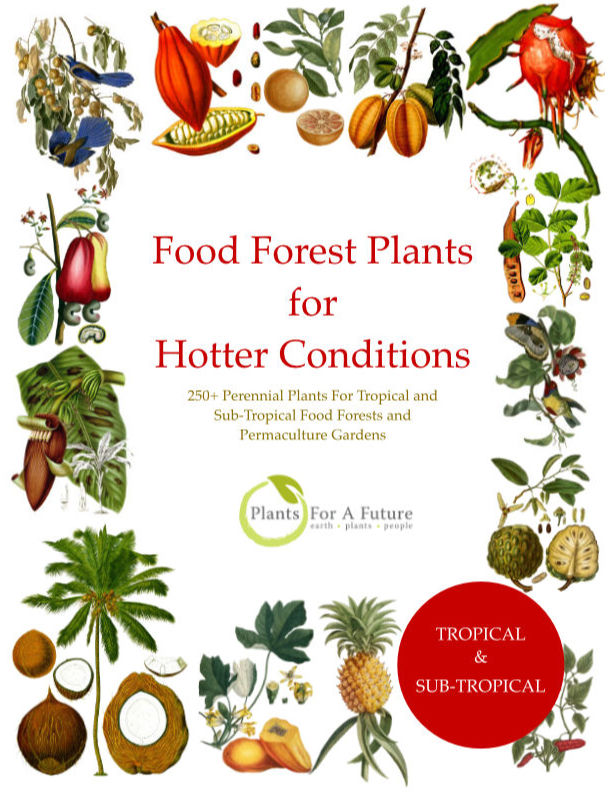
Edible Tropical Plants
Food Forest Plants for Hotter Conditions: 250+ Plants For Tropical Food Forests & Permaculture Gardens.
More
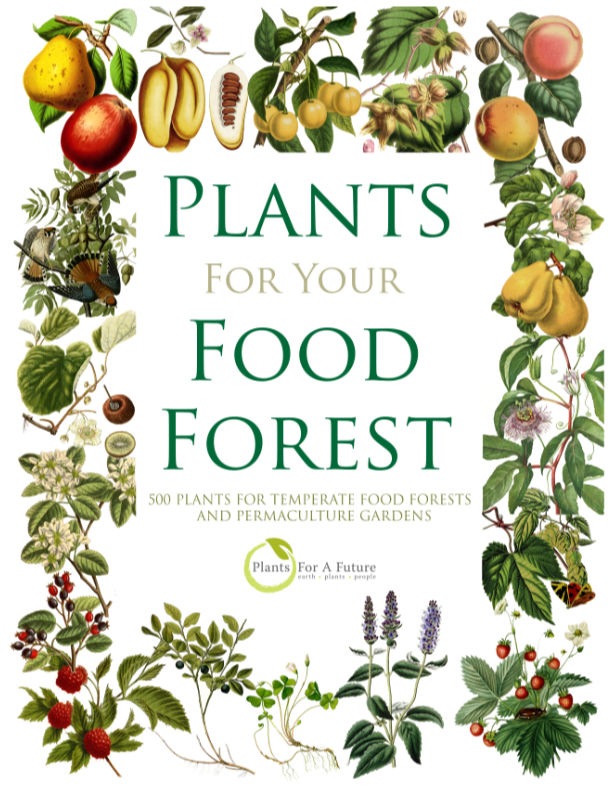
Edible Temperate Plants
Plants for Your Food Forest: 500 Plants for Temperate Food Forests & Permaculture Gardens.
More
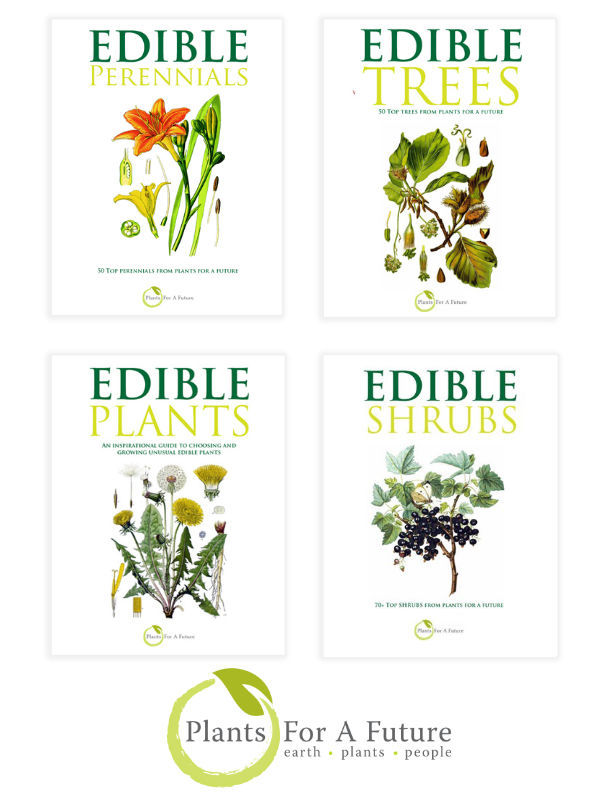
More Books
PFAF have eight books available in paperback and digital formats. Browse the shop for more information.
Shop Now
Other Uses
Pipsissewa is a small groundlayer evergreen, usually 7–30 cm tall, spreading slowly by rhizomes to form patches. It is not a fast groundcover and does not tolerate heavy disturbance. In landscapes it is best considered a specialty woodland plant rather than a robust edible understory species. Where conditions are right it can persist for years, but it is not forgiving of heat, drought, or soil disruption. Ecology & Wildlife: Pipsissewa contributes to forest understory diversity and likely participates in the mycorrhizal ecology typical of conifer and mixed forests. The flowers are insect-pollinated and can be visited by small bees and other generalist forest pollinators. Its evergreen leaves provide minor cover at the ground layer, but it is not generally a major wildlife food plant due to its leathery texture and bitter compounds.
Special Uses
References More on Other Uses
Cultivation details
A subshrub that grows primarily in the temperate biome. Pipsissewa ssp. occidentalis is a small evergreen forest understory plant best regarded as a bitter, aromatic flavorant and medicinal herb rather than an edible. Its greatest value to foragers and plant enthusiasts is its distinctive identity, its cultural history in beverage flavoring traditions, and its place in cool, intact woodland ecosystems. Growing Conditions: This subspecies shares the woodland requirements of the species: cool temperatures, forest shade or dappled light, well-drained but consistently moist soil, and organic-rich litter layers. It typically performs best in acidic or slightly acidic soils under conifers or mixed montane forests and is poorly suited to hot, exposed, or alkaline sites. Habitat & Range: In the western interior and montane regions, this form occurs in forest communities associated with pine, aspen, spruce, and fir. In the Southwest it is primarily a higher-elevation woodland plant rather than a low-desert species, extending northward into cooler regions where forests remain moist enough to support evergreen understory flora. Size & Landscape Performance: Plants are small, typically under 30 cm tall, forming slow-spreading patches. In landscaping it is a niche woodland understory plant rather than a robust groundcover, and it is not a practical edible groundlayer due to slow growth and the minimal edible yield. Cultivation (Horticulture): Cultivation remains difficult for the same reasons as the species overall: it is adapted to forest soils, often dependent on stable microbial and fungal communities, and sensitive to heat and disturbance. Where attempted, it belongs in a cool woodland garden with acidic organic mulch, consistent moisture, and minimal soil disruption. Pests & Problems: Decline is most often caused by environmental mismatch, drought, heat, or disturbance rather than pests. In cultivation, failure is common if soils are alkaline, too dry, too hot, or lacking forest organic layers. Cultivar/Selection Notes: No meaningful cultivars for food use. Subspecies distinctions may be used in floras, but they do not materially change culinary value. Pollination: Pollination is primarily by insects such as small bees and other generalist woodland pollinators that visit the nodding flowers in summer. Insect visitation is the main mechanism supporting seed production. Identification & Habit: Chimaphila umbellata ssp. occidentalis is a low, rhizomatous evergreen with short stems and leathery, serrated leaves distributed along the stem, commonly in whorls. The leaves are glossy and thick, shaped from oblanceolate to narrowly elliptic, with serrated margins and a firm texture that signals “not a tender green.” The plant bears nodding clusters of five-petaled flowers in summer, usually white to pinkish, followed by upright persistent capsules. The occidentalis subspecies is often described as having leaf tips that are more rounded or less sharply pointed than ssp. acuta. In real populations, however, tip shape can vary, and subspecies boundaries are sometimes blurred, so careful botanical context and regional floras are often needed for confident subspecies assignment.
References Carbon Farming Information and Carbon Sequestration Information
Temperature Converter
Type a value in the Celsius field to convert the value to Fahrenheit:
Fahrenheit:
The PFAF Bookshop
Plants For A Future have a number of books available in paperback and digital form. Book titles include Edible Plants, Edible Perennials, Edible Trees,Edible Shrubs, Woodland Gardening, and Temperate Food Forest Plants. Our new book is Food Forest Plants For Hotter Conditions (Tropical and Sub-Tropical).
Shop Now
Plant Propagation
Propagation is by seed or rhizome spread, with seed establishment often slow and rhizome division risky. In most contexts it is not a plant to propagate routinely; conservation-minded appreciation of existing colonies is usually the best path.
Other Names
If available other names are mentioned here
Pipsissewa, Prince’s Pine
Native Range
For Chimaphila umbellata (L.) W.P.C.Barton: US, USA, Alaska, Alberta, Altay, Arizona, Austria, Baltic States, Belarus, British Columbia, Buryatiya, California, Central European Russia, Colorado, Connecticut, Czechia-Slovakia, Delaware, Denmark, District of Columbia, Dominican Republic, East European Russia, Finland, France, Germany, Guatemala, Haiti, Hungary, Idaho, Illinois, Indiana, Inner Mongolia, Iowa, Irkutsk, Japan, Kazakhstan, Khabarovsk, Krasnoyarsk, Krym, Kuril Is., Maine, Manchuria, Manitoba, Maryland, Massachusetts, Mexico Central, Mexico Gulf, Mexico Northeast, Mexico Northwest, Mexico Southeast, Mexico Southwest, Michigan, Minnesota, Montana, Nevada, New Brunswick, New Hampshire, New Jersey, New Mexico, New York, Newfoundland, North Carolina, North European Russia, Northwest European Russia, Northwest Territories, Norway, Nova Scotia, NW. Balkan Pen., Ohio, Ontario, Oregon, Pennsylvania, Poland, Primorye, Prince Edward I., Québec, Rhode I., Romania, Sakhalin, Saskatchewan, South Dakota, South European Russia, Sweden, Switzerland, Ukraine, Utah, Virginia, Washington, West Siberia, West Virginia, Wisconsin, Wyoming, Yakutiya, Yukon
Weed Potential
Right plant wrong place. We are currently updating this section.
Please note that a plant may be invasive in one area but may not in your area so it's worth checking.
None. It is slow, habitat-specific, and not aggressive.
Conservation Status
IUCN Red List of Threatened Plants Status : Not available

Growth: S = slow M = medium F = fast. Soil: L = light (sandy) M = medium H = heavy (clay). pH: A = acid N = neutral B = basic (alkaline). Shade: F = full shade S = semi-shade N = no shade. Moisture: D = dry M = Moist We = wet Wa = water.
Now available:
Food Forest Plants for Mediterranean Conditions
350+ Perennial Plants For Mediterranean and Drier Food Forests and Permaculture Gardens.
[Paperback and eBook]
This is the third in Plants For A Future's series of plant guides for food forests tailored to
specific climate zones. Following volumes on temperate and tropical ecosystems, this book focuses
on species suited to Mediterranean conditions—regions with hot, dry summers and cool, wet winters,
often facing the added challenge of climate change.
Read More
Expert comment
Author
W. P. C. Barton (Rydb.)
Botanical References
Links / References
For a list of references used on this page please go here
Readers comment
| Add a comment |
|
If you have important information about this plant that may help other users please add a comment or link below. Only comments or links that are felt to be directly relevant to a plant will be included. If you think a comment/link or information contained on this page is inaccurate or misleading we would welcome your feedback at [email protected]. If you have questions about a plant please use the Forum on this website as we do not have the resources to answer questions ourselves.
* Please note: the comments by website users are not necessarily those held by PFAF and may give misleading or inaccurate information.
|
Subject : Chimaphila umbellata ssp. occidentalis
|
|
|
|