Translate this page:
Summary
A widespread, highly adaptable winter/spring annual grass with excellent grain nutrition masked by processing challenges and serious weediness. Valuable to foragers who can clean and cook it properly, but unsuitable for intentional introduction. Manage aggressively to prevent spread in agricultural and restoration settings. Avena fatua is a cool-season annual grass and one of the world’s most notorious cereal weeds. It closely resembles cultivated oats in grain size and nutrition, but carries long, black, distinctly bent awns and adherent hulls that complicate processing. In Mediterranean and steppe climates it germinates with cool rains, heads in spring, and shatters by early summer. As food it can be used much like oats once awns and hulls are removed or by extracting “oat milk” from whole spikelets, but the plant is primarily of agronomic concern due to yield losses, persistent seedbanks, and herbicide resistance.
Physical Characteristics

 Avena fatua is a ANNUAL growing to 1.2 m (4ft).
See above for USDA hardiness. It is hardy to UK zone 4 and is not frost tender. It is in flower from June to July, and the seeds ripen from August to October. The species is hermaphrodite (has both male and female organs) and is pollinated by Wind.
Suitable for: light (sandy), medium (loamy) and heavy (clay) soils, prefers well-drained soil and can grow in heavy clay and nutritionally poor soils. Suitable pH: mildly acid, neutral and basic (mildly alkaline) soils and can grow in very acid soils.
It cannot grow in the shade. It prefers dry or moist soil and can tolerate drought.
UK Hardiness Map
US Hardiness Map
Synonyms
Plant Habitats
Cultivated Beds;
Edible Uses
Edible Parts: Seed
Edible Uses: Coffee
Nutritionally comparable to cultivated oats; good flavor once cleaned and cooked. Best low-tech use is oat milk (pound–boil–filter) or coarse porridge after rigorous de-awning/dehulling. Always avoid moldy heads and filter out hairs/awns; moderate intake if sensitive to avenin [2-3]. Rating: 3/5. Seed - cooked[2, 46, 61, 85, 95, 161]. The seed ripens in the latter half of summer and, when harvested and dried, can store for several years. It has a floury texture and a mild, somewhat creamy flavour. It can be used as a staple food crop in either savoury or sweet dishes. The seed can be cooked whole, though it is more commonly ground into a flour and used as a cereal in all the ways that oats are used, especially as a porridge but also to make biscuits, sourdough bread etc. The seed can also be sprouted and eaten raw or cooked in salads, stews etc. The roasted seed is a coffee substitute.Specific indigenous dietary records for A. fatua are limited; the grain has been opportunistically foraged where abundant and used similarly to domesticated oats (porridges, beverages). Most historical attention is agronomic—as a weed in colonial and modern cereal systems [2-3]. Harvest & Processing Workflow 1. Scout in late spring for straw-colored panicles with dark, bent awns; avoid diseased stands. 2.Clip panicles into sacks; air-dry 3–7 days until crisp. 3.Thresh (beat in a clean bin). 4. De-awn by rubbing or brief impact milling; sieve off awns/hairs. 5a) For oat milk: pound remaining spikelets, simmer 20–40 min, filter through fine cloth; reduce to taste. 5b) For groats/flour: parch lightly, crack hulls (dehuller or burr mill set wide), winnow/sieve; steam and roll for flakes or grind into flour. 5. Store cleaned grain <12% moisture in airtight containers; freeze 3–7 days to break insect cycles. Safety & Cautions (Food Use):• Cook wild grain to reduce microbial/mycotoxin risk; discard visibly moldy heads.• Remove/strain out awns and hairs (throat/skin irritants).• Oats are naturally gluten-free but contain avenin; some with celiac disease react; cross-contact with gluten is common in the wild.• Individuals with strong grass pollen/awn sensitivities should handle panicles with gloves and eye protection.
References More on Edible Uses
Medicinal Uses
Plants For A Future can not take any responsibility for any adverse effects from the use of plants. Always seek advice from a professional before using a plant medicinally.
Diuretic Emollient Refrigerant
The seeds are diuretic, emollient and refrigerant[240].
References More on Medicinal Uses
The Bookshop: Edible Plant Books
Our Latest books on Perennial Plants For Food Forests and Permaculture Gardens in paperback or digital formats.
Edible Tropical Plants
Food Forest Plants for Hotter Conditions: 250+ Plants For Tropical Food Forests & Permaculture Gardens.
More
Edible Temperate Plants
Plants for Your Food Forest: 500 Plants for Temperate Food Forests & Permaculture Gardens.
More
More Books
PFAF have eight books available in paperback and digital formats. Browse the shop for more information.
Shop Now
Other Uses
Fibre Mulch Paper Thatching
The straw has a wide range of uses such as for bio-mass, fibre, mulch, paper-making and thatching[171]. Some caution is advised in its use as a mulch since oat straw can infest strawberries with stem and bulb eelworm. Ecology & Wildlife: Provides seed forage for granivorous birds and small mammals; foliage grazed as tender seedlings. Dense infestations suppress native forbs and reduce crop yields. Functions as an alternate host for certain cereal diseases and aphids.
Special Uses
References More on Other Uses
Cultivation details
Height typically 0.4–1.2 m (to ~1.5 m); spread by clumping and prolific seeding rather than rhizomes. As an intentional landscape plant it has little value (and is often regulated); as a nurse/cover it’s risky due to weediness. A widespread, highly adaptable winter/spring annual grass with excellent grain nutrition masked by processing challenges and serious weediness. Valuable to foragers who can clean and cook it properly, but unsuitable for intentional introduction. Manage aggressively to prevent spread in agricultural and restoration settings. Succeeds in any moderately fertile soil in full sun[200]. Prefers a poor dry soil[134]. Tolerates a pH in the range 4.5 to 6.5. A parent of the cultivated oat, A. sativa[57, 171] but the seeds are somewhat smaller and yields lower. This species could be of importance in breeding programmes for the cultivated oats (A. sativa), where it could confer drought tolerance, disease resistance and higher yields. Oats are in general easily grown plants but, especially when grown on a small scale, the seed is often completely eaten out by birds. Some sort of netting seems to be the best answer on a garden scale. Look-Alikes & Confusion Risks: Cultivated oat (Avena sativa) — often larger, awns variable/shorter or absent in many cultivars; hull adherence varies; usually within fields by sowing. Slender wild oat (Avena barbata) — smaller spikelets, finer habit; common along the Pacific Coast. Wild oat complex (A. sterilis ssp. ludoviciana) — larger, earlier shattering. Bromes (e.g., Bromus diandrus, B. madritensis) — panicles differ; brome spikelets subtend multiple florets with different glume/lemma characters and often awns from the lemma tip, not the back. Key for A. fatua: large glumes; 2–3 florets; long twisted, geniculate black awn from lemma back; soft oat-like leaves with a big membranous ligule, no auricles. Pests & Problems: Diseases: crown rust (Puccinia coronata), smuts (Ustilago avenae), Barley Yellow Dwarf Virus (aphid-borne), Fusarium spp. (head blight; DON risk). Insects: aphids, armyworms, wireworms. Post-harvest: storage moths, weevils, molds. Mechanical: awns and silica hairs irritate skin/eyes; awns tangle in fleece and equipment. Cultivation (Horticulture): Generally not recommended to cultivate where invasive. If grown for study or food, confine to containers or controlled plots. Harvest before seed shattering and bag panicles to prevent escape. Cool-season sowing; modest fertility; avoid irrigation schedules that promote excessive seed set.
References Carbon Farming Information and Carbon Sequestration Information
Temperature Converter
Type a value in the Celsius field to convert the value to Fahrenheit:
Fahrenheit:
The PFAF Bookshop
Plants For A Future have a number of books available in paperback and digital form. Book titles include Edible Plants, Edible Perennials, Edible Trees,Edible Shrubs, Woodland Gardening, and Temperate Food Forest Plants. Our new book is Food Forest Plants For Hotter Conditions (Tropical and Sub-Tropical).
Shop Now
Plant Propagation
By seed only. Sow shallowly (=1 cm) into cool, moist soil. Germinates at 5–20 °C. No dormancy treatment needed, though wild seed often has variable dormancy (spread germination over multiple seasons). Prevent escape by removing volunteers promptly.
Other Names
If available other names are mentioned here
Common wild oat, flaxgrass,
oatgrass, wheat oats,
wild oats. Spanish: avena loca; avena silvestre; avena silvestre comun; ballueca. French: folle avoine. Portuguese: balanco. Brazil: aveia-brava; aveia-fatua. Germany: Flug-Hafer; Wind-Hafer. Italy: avena matta; avena selvatica. Japan: chahiki; karasumugi. Netherlands: oot; wilde haver. Poland: owies gluchy. Sweden: fyghavre. Turkey: yabani yulaf.
Native Range
TEMPERATE ASIA: Saudi Arabia, Afghanistan, Iran, Iraq, Israel, Lebanon, Turkey, Russian Federation-Ciscaucasia (Ciscaucasia), Armenia, Azerbaijan, Georgia, Russian Federation (Dagestan), Kazakhstan, Kyrgyzstan, Tajikistan, Turkmenistan, Uzbekistan, China, Korea, Japan TROPICAL ASIA: India, Nepal, Pakistan EUROPE: Denmark, United Kingdom, Norway, Sweden, Austria, Belgium, Switzerland, Czech Republic, Germany, Hungary, Netherlands, Poland, Slovakia, Russian Federation-European part (European part (c. & s.)), Belarus, Estonia, Lithuania, Latvia, Moldova, Russian Federation (Kalmykija, Respublika, Astrakhan, Saratov, Volgogradskaja oblast), Ukraine (incl. Krym), Bulgaria, Croatia, Italy, Romania, Serbia, Slovenia, Spain, France, Portugal AFRICA: Algeria, Egypt, Libya, Morocco, Tunisia, Ethiopia
Weed Potential
Right plant wrong place. We are currently updating this section.
Please note that a plant may be invasive in one area but may not in your area so it's worth checking.
Very high. A serious weed of cereals and legumes. Traits include: early vigor, heterogeneous dormancy, strong shattering, competitive tillering, seed longevity (several years), and documented resistance to multiple herbicide modes in many regions. Movement via contaminated grain, baled hay/straw, machinery, animals. This plant can be weedy or invasive. This and other wild oats can become troublesome in prairie agriculture when it invades and lowers the quality of a field crop, or competes for resources with the crop plants. It takes very few wild oat plants to cause a significant reduction in the yield of a wheat or cultivated oat field, even though the seeds are a type of oat.
Conservation Status
IUCN Red List of Threatened Plants Status : Status: Data Deficient.
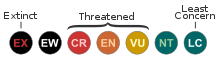
Growth: S = slow M = medium F = fast. Soil: L = light (sandy) M = medium H = heavy (clay). pH: A = acid N = neutral B = basic (alkaline). Shade: F = full shade S = semi-shade N = no shade. Moisture: D = dry M = Moist We = wet Wa = water.
Now available:
Food Forest Plants for Mediterranean Conditions
350+ Perennial Plants For Mediterranean and Drier Food Forests and Permaculture Gardens.
[Paperback and eBook]
This is the third in Plants For A Future's series of plant guides for food forests tailored to
specific climate zones. Following volumes on temperate and tropical ecosystems, this book focuses
on species suited to Mediterranean conditions—regions with hot, dry summers and cool, wet winters,
often facing the added challenge of climate change.
Read More
Expert comment
Author
L.
Botanical References
17
Links / References
For a list of references used on this page please go here
Readers comment
© 2010, Plants For A Future. Plants For A Future is a charitable company limited by guarantee, registered in England and Wales. Charity No. 1057719, Company No. 3204567.