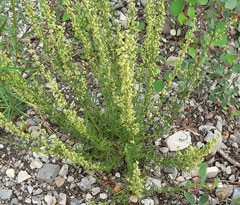
 |
|
http://commons.wikimedia.org/wiki/User:Stan_Shebs |
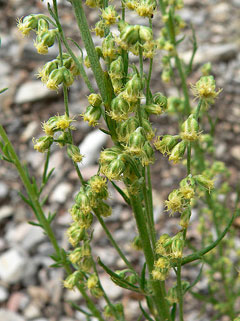 |
| http://commons.wikimedia.org/wiki/User:Stan_Shebs |
Translate this page:
Summary
A Moderate-growing mountain perennial. Michaux’s sagewort was historically used for seeds, with its lemon-scented leaves possibly usable as a culinary accent. Safety and value as a food are uncertain, making it a minor foraging plant. A rare mountain Artemisia, Michaux’s sagewort, is known primarily from ethnobotanical records of seed use. It adds a lemon scent to the genus but is not well documented as food or medicine. Its ecological and cultural role outweighs its modern edibility. Seeds of several Artemisia species (notably A. dracunculus, A. carruthii, A. biennis, and sometimes A. tridentata) were important food resources for Native Americans. They are tiny but abundant, gathered in autumn, and usually ground into flour or porridge. Leaves of a few species (A. dracunculus, A. frigida, A. ludoviciana) are suitable as culinary herbs. Most other parts are inedible or toxic due to bitter sesquiterpene lactones and thujone. Overall, food uses are secondary to medicinal and ceremonial roles. The Artemisia genus is a diverse and ecologically dominant group across the American West, ranging from weeds like biennial wormwood to keystone shrubs like big sagebrush. While some species contributed seeds or flavorings to traditional diets, they are generally risky or unpleasant as foods. Their greater value lies in medicine, ritual, ecological stability, and seasoning. Only wild tarragon (A. dracunculus) stands out as a truly high-quality edible.
Physical Characteristics

 Artemisia michauxiana is a PERENNIAL growing to 0.5 m (1ft 8in) at a medium rate.
See above for USDA hardiness. It is hardy to UK zone 3. The species is hermaphrodite (has both male and female organs) and is pollinated by Wind.
Suitable for: light (sandy) and medium (loamy) soils and prefers well-drained soil. Suitable pH: neutral and basic (mildly alkaline) soils. It can grow in semi-shade (light woodland) or no shade. It prefers dry or moist soil and can tolerate drought.
UK Hardiness Map
US Hardiness Map
Synonyms
A. discolor. Dougl. ex D.C. A. vulgaris discolor.
Plant Habitats
Cultivated Beds;
Edible Uses
Edible Parts: Seed
Edible Uses:
Seeds eaten by US Goshiute (“kutsipawatsip”), probably in porridges. Few modern references exist. Lemon-scented leaves may be usable as a seasoning, but this has not been verified.[2-3]. Seed[105, 161, 177]. No further details are given, but the seed is very small and fiddly to use.
References More on Edible Uses
Medicinal Uses
Plants For A Future can not take any responsibility for any adverse effects from the use of plants. Always seek advice from a professional before using a plant medicinally.
Poultice
A hot infusion of the plant has been used in the treatment of headaches[257]. A poultice of the chewed plant is applied to sprains and swellings[257].
References More on Medicinal Uses
The Bookshop: Edible Plant Books
Our Latest books on Perennial Plants For Food Forests and Permaculture Gardens in paperback or digital formats.
Edible Tropical Plants
Food Forest Plants for Hotter Conditions: 250+ Plants For Tropical Food Forests & Permaculture Gardens.
More
Edible Temperate Plants
Plants for Your Food Forest: 500 Plants for Temperate Food Forests & Permaculture Gardens.
More
More Books
PFAF have eight books available in paperback and digital formats. Browse the shop for more information.
Shop Now
Other Uses
Minor medicinal use; aromatic foliage possibly used for incense.
Special Uses
References More on Other Uses
Cultivation details
Habitat & Distribution: High-elevation species of Utah, Nevada, and the northern Rockies. Found in mountain meadows and alpine slopes. Blooms in summer; seeds mature before frost. Growth & Ecology:
Perennial herb with aromatic lemon-scented foliage. Rare and localized. Cultivation: prefers high mountain soils, well-drained, cool climates. Rarely cultivated. Easily grown in a well-drained circumneutral or slightly alkaline loamy soil, preferring a warm sunny dry position. Established plants are drought tolerant[200]. Plants are longer lived, more hardy and more aromatic when they are grown in a poor dry soil[245]. Members of this genus are rarely if ever troubled by browsing deer[233]. USDA zones 3–9. Very hardy.
References Carbon Farming Information and Carbon Sequestration Information
Temperature Converter
Type a value in the Celsius field to convert the value to Fahrenheit:
Fahrenheit:
The PFAF Bookshop
Plants For A Future have a number of books available in paperback and digital form. Book titles include Edible Plants, Edible Perennials, Edible Trees,Edible Shrubs, Woodland Gardening, and Temperate Food Forest Plants. Our new book is Food Forest Plants For Hotter Conditions (Tropical and Sub-Tropical).
Shop Now
Plant Propagation
Seed - surface sow from late winter to early summer in a greenhouse, making sure that the compost does not dry out[200]. When large enough to handle, prick the seedlings out into individual pots and grow them on in the greenhouse for their first winter. Plant out in late spring or early summer. Division in spring or autumn[200]. Basal cuttings in late spring. Harvest the young shoots when about10 - 15cm long, pot up in a lightly shaded position in a greenhouse or cold frame and plant them out when well rooted. Very easy.
Other Names
If available other names are mentioned here
Artemisia michauxiana Besser – Michaux’s, Lemon, or Mountain Sagewort, Michaux’s Wormwood
Native Range
NORTHERN AMERICA: Canada (Yukon, Alberta, British Columbia), United States (Colorado, Idaho, Montana, Oregon, Washington, Wyoming, California, Nevada, Utah)
Weed Potential
Right plant wrong place. We are currently updating this section.
Please note that a plant may be invasive in one area but may not in your area so it's worth checking.
Low — localized and restricted to higher elevations.
Conservation Status
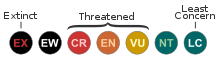
IUCN Red List of Threatened Plants Status : Not listed.
| Related Plants
|
| Latin Name | Common Name | Habit | Height | Hardiness | Growth | Soil | Shade | Moisture | Edible | Medicinal | Other |
| Artemisia abrotanum | Southernwood | Shrub | 1.2 |
4-8
| M | LMH | SN | DM | 1 | 3 | 3 |
| Artemisia absinthium | Wormwood, Absinthium. | Perennial | 1.0 |
4-9
| M | LM | SN | DM | 1 | 3 | 3 |
| Artemisia annua | Qing Hao, Sweet sagewort | Annual | 3.0 |
6-9
| F | LM | SN | DM | 1 | 4 | 2 |
| Artemisia anomala | Anomalous Wormwood | Perennial | 1.0 |
8-10
| M | LMH | SN | M | 0 | 2 | 0 |
| Artemisia arborescens | Tree Wormwood | Shrub | 1.0 |
8-10
| F | LM | N | DM | 0 | 2 | 3 |
| Artemisia argyi | Chinese Mugwort | Perennial | 1.5 |
4-9
| F | LM | SN | DM | 0 | 2 | 0 |
| Artemisia biennis | Biennial Wormwood | Annual/Biennial | 1.0 |
3-8
| F | LM | SN | DM | 1 | 1 | 1 |
| Artemisia californica | California Sagebrush | Shrub | 2.0 |
7-10
| F | LM | N | DM | 0 | 2 | 3 |
| Artemisia campestris | Field Southernwood | Perennial | 1.5 |
3-8
| M | LM | SN | DM | 1 | 2 | 1 |
| Artemisia campestris glutinosa | Sticky Field Wormwood | Perennial | 1.5 |
5-9
| M | LM | SN | DM | 0 | 0 | 1 |
| Artemisia capillaris | Yin Chen Hao | Shrub | 0.5 |
6-9
| M | LM | SN | DM | 1 | 3 | 0 |
| Artemisia carruthii | Carruth Wormwood | Perennial | 0.4 |
4-9
| M | LM | N | DM | 1 | 0 | 0 |
| Artemisia caruifolia | Carrot-leaved Wormwood | Annual | 1.0 |
0-0
| | LM | SN | DM | 1 | 3 | 1 |
| Artemisia cina | Cina, Santonica | Shrub | 1.0 |
6-9
| M | LM | S | DM | 0 | 3 | 0 |
| Artemisia dracunculoides | Russian Tarragon, Tarragon, French Tarragon | Perennial | 1.0 |
5-8
| M | LM | SN | DM | 2 | 1 | 3 |
| Artemisia dracunculus | Tarragon, French Tarragon | Perennial | 0.6 |
5-9
| M | LM | SN | DM | 4 | 2 | 3 |
| Artemisia filifolia | Sand Sage, Sand sagebrush | Shrub | 1.2 |
3-7
| M | LM | SN | DM | 0 | 2 | 3 |
| Artemisia frigida | Fringed Wormwood, Prairie sagewort | Perennial | 0.3 |
3-8
| M | LM | N | DM | 2 | 2 | 3 |
| Artemisia glacialis | Glacier Wormwood | Perennial | 0.2 |
4-8
| S | LMH | N | DM | 1 | 2 | 0 |
| Artemisia gmelinii | Russian Wormwood, Gmelin's wormwood | Perennial | 1.5 |
3-7
| M | LMH | N | DM | 1 | 1 | 2 |
| Artemisia herba-alba | White Wormwood | Shrub | 0.3 |
7-10
| F | LM | N | DM | 0 | 3 | 3 |
| Artemisia indica | Indian Wormwood; Indian Mugwort | Annual/Perennial | 1.2 |
6-9
| F | LM | SN | DM | 3 | 3 | 2 |
| Artemisia japonica | Japanese Wormwood | Perennial | 1.0 |
7-10
| F | LMH | SN | DM | 1 | 2 | 1 |
| Artemisia keiskeana | Keiske’s Wormwood | Perennial | 0.6 |
5-8
| F | LMH | SN | DM | 2 | 1 | 2 |
| Artemisia laciniata | Siberian wormwood | Perennial | 1.0 |
3-7
| S | LMH | SN | DM | 1 | 0 | 0 |
| Artemisia lactiflora | White Mugwort | Perennial | 1.5 |
4-8
| S | LMH | SN | M | 0 | 2 | |
| Artemisia lancea | Lance-leaved Wormwood | Perennial | 1.2 |
4-9
| F | LMH | SN | DM | 1 | 1 | 0 |
| Artemisia ludoviciana | White Sage, Louisiana Sage, Prairie Sage, Western Mugwort | Perennial | 1.0 |
3-9
| M | LM | SN | DM | 2 | 2 | 2 |
| Artemisia ludoviciana gnaphalodes | White Sage | Perennial | 1.0 |
4-8
| M | LM | SN | DM | 0 | 2 | 1 |
| Artemisia maritima | Sea Wormwood | Shrub | 0.6 |
6-9
| M | LM | N | DM | 1 | 2 | 1 |
|
|
Growth: S = slow M = medium F = fast. Soil: L = light (sandy) M = medium H = heavy (clay). pH: A = acid N = neutral B = basic (alkaline). Shade: F = full shade S = semi-shade N = no shade. Moisture: D = dry M = Moist We = wet Wa = water.
Now available:
Food Forest Plants for Mediterranean Conditions
350+ Perennial Plants For Mediterranean and Drier Food Forests and Permaculture Gardens.
[Paperback and eBook]
This is the third in Plants For A Future's series of plant guides for food forests tailored to
specific climate zones. Following volumes on temperate and tropical ecosystems, this book focuses
on species suited to Mediterranean conditions—regions with hot, dry summers and cool, wet winters,
often facing the added challenge of climate change.
Read More
Expert comment
Author
Besser.
Botanical References
60200
Links / References
For a list of references used on this page please go here
Readers comment
| Add a comment |
|
If you have important information about this plant that may help other users please add a comment or link below. Only comments or links that are felt to be directly relevant to a plant will be included. If you think a comment/link or information contained on this page is inaccurate or misleading we would welcome your feedback at [email protected]. If you have questions about a plant please use the Forum on this website as we do not have the resources to answer questions ourselves.
* Please note: the comments by website users are not necessarily those held by PFAF and may give misleading or inaccurate information.
|
Subject : Artemisia michauxiana
|
|
|
|