 |
|
© 2013 National Parks Board, Singapore |
 |
| © 2013 National Parks Board, Singapore |
Translate this page:
Summary
Taxonomic Note: This genus was formerly classified in the family Chenopodiaceae. Modern classifications include it within the Amaranthaceae.
Also known as Sissoo spinach, Brazilian spinach or Alternanthera sissoo, is commonly known as ground cover due to its fast-growing characteristic. Its leaves are edible, usually cooked by steaming or boiling and eaten as spinach. It grows about 30 cm high, prefers 50% or more shade, and can tolerate a wide range of pH soil conditions. Cultivation is through stem cuttings by simple layering. Other common name is Sambu or Samba lettuce. Alternanthera sissoo is a synonym of Alternanthera sessilis.
Physical Characteristics

 Alternanthera sissoo is an evergreen Perennial growing to 0.4 m (1ft 4in) by 0.4 m (1ft 4in) at a fast rate.
See above for USDA hardiness. It is hardy to UK zone 10. The plant is self-fertile.
It is noted for attracting wildlife.
Suitable for: light (sandy), medium (loamy) and heavy (clay) soils and prefers well-drained soil. Suitable pH: mildly acid, neutral and basic (mildly alkaline) soils. It can grow in full shade (deep woodland) semi-shade (light woodland) or no shade. It prefers moist soil.
UK Hardiness Map
US Hardiness Map
Synonyms
Alternanthera sessilis
Plant Habitats
Edible Uses
Edible Parts: Leaves Shoots
Edible Uses:
Leaves - cooked and used as a spinach[ 298 ]. The shoots are harvested when 15 - 25cm long - frequent harvesting stimulates new growth and increases overall yields[ 298 ].
References More on Edible Uses
Medicinal Uses
Plants For A Future can not take any responsibility for any adverse effects from the use of plants. Always seek advice from a professional before using a plant medicinally.
None known
References More on Medicinal Uses
Other Uses
Other uses rating: Good (3/5). Agroforestry Uses: A fast-growing, weed-excluding ground cover plant. Barrier. 1. Nectary - Flowers rich in nectar and pollen:
No – Alternanthera species typically do not have significant nectar production, making them less attractive to pollinators than flowering plants known for their high nectar content.
2. Wildlife - Food (Fruit, Seeds, Leaf litter, Shelter, Nesting, Roosting):
Yes, the leaves are edible and can be used in salads or cooked dishes, providing food for humans and potentially some wildlife. However, the plant may not offer significant nesting or roosting opportunities.
3. Invertebrate Shelter (Overwintering sites, Leaf litter, Groundcover):
No – While Brazilian Spinach can act as ground cover, it does not significantly contribute to overwintering sites or provide leaf litter for invertebrates.
4. Pest Confuser (Smell):
No – There are no notable pest-confusing properties associated with Brazilian Spinach.
Special Uses
Food Forest Ground Cover
References More on Other Uses
Cultivation details
Plants can thrive in 50% or more shade. Prefers a well-drained soil with a high organic content[ 298 ]. It is a fast-growing, spreading plant, but it does not produce seeds and is not considered to be invasive. The plant can suffer severe insect damage to the leaves in some areas[ 298 ]. Leaves can be harvested year-round, but they are typically best harvested in spring and summer when young and tender.
Brazilian Spinach flowers from late summer to autumn.
It can serve as ground cover, helping to prevent soil erosion and improve soil quality.
Brazilian Spinach grows quickly and can reach maturity in about 3 to 4 months under favourable conditions.
References Carbon Farming Information and Carbon Sequestration Information
Temperature Converter
Type a value in the Celsius field to convert the value to Fahrenheit:
Fahrenheit:
Plant Propagation
Seed is not produced. Cuttings - very easy.
Other Names
If available other names are mentioned here
Brazilian Spinach, Sambu, Samba lettuce, Sessile joyweed.
Alternanthera sissoo. Alternanthera sessilis. Dwarf copperleaf.
Native Range
TEMPERATE ASIA: an island in Indonesia), Assam, Bangladesh, Borneo, Cambodia, India, Indonesia), Iran, Iraq, Japan), Japan), Jawa (Java, Laccadive Islands, Laos, Lebanon-Syria, Malaya (Peninsular Malaysia), Maluku (Moluccas, Myanmar (Burma), Nansei-shoto (Ryukyu Islands, Nepal, New Guinea, Ogasawara-shoto (Bonin Islands, Pakistan, Philippines, Taiwan, Thailand, Vietnam, West Himalaya, Yemen,Andaman Islands. NORTHERN AMERICA: Belize, Cayman Islands, Costa Rica, Cuba, Dominican Republic, El Salvador, Guatemala, Haiti, Honduras, Jamaica, Mexico Gulf, Mexico Northeast, Mexico Southeast, Mexico Southwest, Nicaragua, Panama, Puerto Rico, Trinidad-Tobago, Venezuela, SOUTHERN AMERICA: Bolivia, Brazil North, Brazil Northeast, Brazil South, Brazil Southeast, Brazil West-Central, Colombia, French Guiana, Guyana, Paraguay, Peru, Suriname, AUSTRALASIA: New South Wales (Australia), Northern Territory (Australia), Solomon Islands, Western Australia
Weed Potential
Right plant wrong place. We are currently updating this section.
Please note that a plant may be invasive in one area but may not
in your area so it's worth checking.
None Known
Conservation Status
IUCN Red List of Threatened Plants Status : This taxon has not yet been assessed.
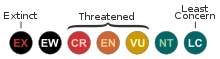
IUCN Red List
Growth: S = slow M = medium F = fast. Soil: L = light (sandy) M = medium H = heavy (clay). pH: A = acid N = neutral B = basic (alkaline). Shade: F = full shade S = semi-shade N = no shade. Moisture: D = dry M = Moist We = wet Wa = water.
Support Plants For A Future
Plants For A Future relies on regular donations to keep our free database and search facilities going, to pay for ongoing research, improvements and enhancements, and to develop and publish new books.
Read more
Choose Currency
Donate in £ GBP
Donate in $ USD
Donate in € EUR
Securely pay via PayPal or Credit/Debit Card without an account.
Expert comment
Author
Velde
Botanical References
1
Links / References
For a list of references used on this page please go here
A special thanks to Ken Fern for some of the information used on this page.
Readers comment
| Add a comment |
|
If you have important information about this plant that may help other users please add a comment or link below. Only comments or links that are felt to be directly relevant to a plant will be included. If you think a comment/link or information contained on this page is inaccurate or misleading we would welcome your feedback at [email protected]. If you have questions about a plant please use the Forum on this website as we do not have the resources to answer questions ourselves.
* Please note: the comments by website users are not necessarily those held by PFAF and may give misleading or inaccurate information.
|
Subject : Alternanthera sissoo
|
|
|
|