 |
|
http://commons.wikimedia.org/wiki/User:Sten |
 |
|
Translate this page:
Summary
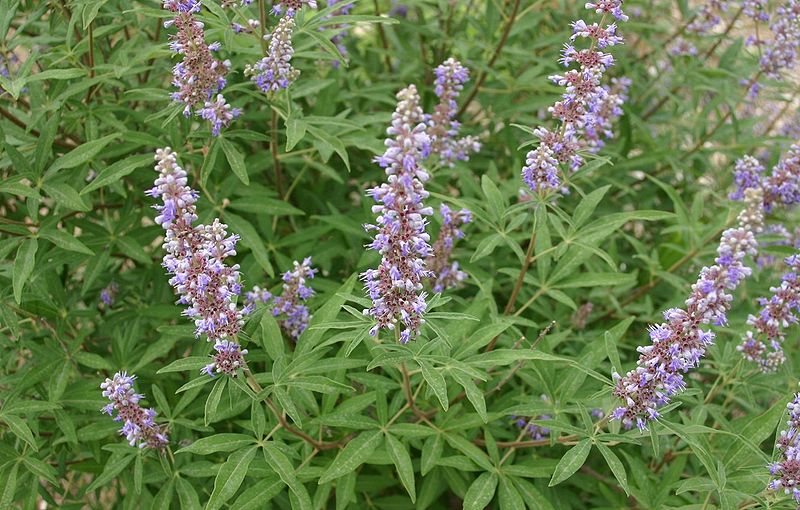
Bloom Color: Blue, Lavender, White. Main Bloom Time: Early summer, Early spring, Late summer, Late spring, Mid summer, Mid spring. Form: Rounded, Vase.
Physical Characteristics

 Vitex agnus-castus is a deciduous Shrub growing to 3 m (9ft) by 3 m (9ft) at a medium rate.
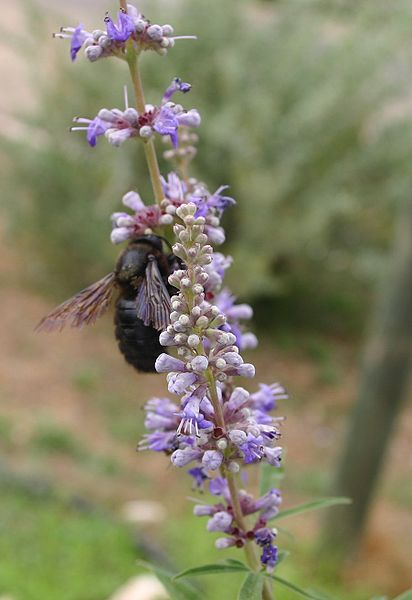
See above for USDA hardiness. It is hardy to UK zone 7. It is in leaf from June to October, in flower from September to October. The species is hermaphrodite (has both male and female organs) and is pollinated by Insects.
Suitable for: light (sandy) and medium (loamy) soils, prefers well-drained soil and can grow in nutritionally poor soil. Suitable pH: mildly acid, neutral and basic (mildly alkaline) soils. It cannot grow in the shade. It prefers dry or moist soil.
UK Hardiness Map
US Hardiness Map
Synonyms
Plant Habitats
Woodland Garden Sunny Edge; Dappled Shade;
Edible Uses
Edible Parts:
Edible Uses: Condiment
The fruit is used as a condiment, it is a pepper substitute[46, 61, 100, 183]. The aromatic leaves are also used as a spice[183, 227]. This plant forms one of the ingredients of the legendary Moroccan spice mixture 'ras el hanout'[183]. Unfortunately, the seed is very unlikely to be produced in Britain[K].
References More on Edible Uses
Medicinal Uses
Plants For A Future can not take any responsibility for any adverse effects from the use of plants. Always seek advice from a professional before using a plant medicinally.
Anaphrodisiac Aphrodisiac Diaphoretic Diuretic Febrifuge Galactogogue Infertility Ophthalmic
Sedative Stomachic Women's complaints
Agnus castus has been used for thousands of years for its beneficial affect on the female hormonal system. Modern research has confirmed this use, the seeds being used to restore balanced functioning to the female reproductive system[254]. The seeds and fruits are anaphrodisiac, aphrodisiac, galactogogue, ophthalmic, sedative, stomachic, women's complaints[89, 148, 165]. Prolonged usage restores corpus luteum function[165]. Unfortunately, the berries are unlikely to be produced in the British climate[K]. The berries of this plant have a range of medicinal actions but possibly the most important is its ability to rectify hormonal imbalances caused by an excess of oestrogen and an insufficiency of progesterone[224]. It acts upon the pituitary gland, reducing the production of certain hormones and increasing the production of others, shifting the balance in favour of the gestagens. Thus it has a wide application of uses in malfunctions of the feminine reproductive system and has been used with great effect in restoring absent menstruation, regulating heavy periods, restoring fertility when this is caused by hormonal imbalance, relieving pre-menstrual tension and easing the change of the menopause[224]. Some caution is advised since excessive doses can cause a nervous disorder known as formication, which manifests as a sensation of insects crawling over the skin[238]. The berries are considered to be an aphrodisiac[89], though other reports say that they are anaphrodisiac[11, 46]. The reason for this apparent disagreement is that the berries have a regulating effect on the body and so are likely to increase sexual activity in those who are not very active in this area whilst reducing it in those who are very active[K]. The fresh berries are pounded to a pulp and used in the form of a tincture for the relief of paralysis, pains in the limbs, weakness etc[4]. Other uses include: reduced flatulence, suppress appetite and induce sleep. Unproven uses include: treatment of impotence, prostatitis, swelling of the testes, sterility, swelling of the ovaries[301]. Not recommended during pregnancy and could inhibit milk production[301]. The German Commission E Monographs, a therapeutic guide to herbal medicine approve Vitex agnus-castus for premenstrual syndrome, and menopausal complaints (see [302] for critics of commission E).
References More on Medicinal Uses
The Bookshop: Edible Plant Books
Our Latest books on Perennial Plants For Food Forests and Permaculture Gardens in paperback or digital formats.
Edible Tropical Plants
Food Forest Plants for Hotter Conditions: 250+ Plants For Tropical Food Forests & Permaculture Gardens.
More
Edible Temperate Plants
Plants for Your Food Forest: 500 Plants for Temperate Food Forests & Permaculture Gardens.
More
More Books
PFAF have eight books available in paperback and digital formats. Browse the shop for more information.
Shop Now
Other Uses
References More on Other Uses
Cultivation details
Landscape Uses:Border, Container, Espalier, Pollard, Standard, Specimen. Prefers a light well-drained loamy soil in a warm sunny position sheltered from cold drying winds[49, 200]. Succeeds in dry soils. Intolerant of water-logging[202]. Hardy to about -10°c, this species only succeeds outdoors in the milder parts of Britain[1, 11], though it grows well on a wall at Kew[11]. Plants only flower freely in a warm summer, so they are best grown against a sunny wall even in areas of the country where they are hardy[219]. The plants failed to open their flowers on our Cornish trial ground even after a very hot summer[K]. The flowers are produced so late in the season that they are unlikely to produce viable seed in this country even if they flower properly[K]. A very ornamental plant[1], there are some named varieties[219]. The whole plant is aromatic, the leaves and stems are strongly aromatic[182], the flowers are deliciously scented[245] and the dried seeds have a pungent lemony perfume[245]. This species has long been regarded as a symbol of chastity[46]. Flowers are produced at the ends of the current year's growth[202]. Any pruning is best carried out in the spring and should consist of cutting out dead wood and shortening last year's flowering branches[219]. Special Features:
Fragrant foliage, Not North American native, Naturalizing, Attracts butterflies, Fragrant flowers, Attractive flowers or blooms. For polyculture design as well as the above-ground architecture (form - tree, shrub etc. and size shown above) information on the habit and root pattern is also useful and given here if available. The plant growth habit is multistemmed with multiple stems from the crown [1-2].
References Carbon Farming Information and Carbon Sequestration Information
Temperature Converter
Type a value in the Celsius field to convert the value to Fahrenheit:
Fahrenheit:
The PFAF Bookshop
Plants For A Future have a number of books available in paperback and digital form. Book titles include Edible Plants, Edible Perennials, Edible Trees,Edible Shrubs, Woodland Gardening, and Temperate Food Forest Plants. Our new book is Food Forest Plants For Hotter Conditions (Tropical and Sub-Tropical).
Shop Now
Plant Propagation
Seed - sow March in a warm greenhouse. The seed does not need pre-treatment[113]. Germination is usually free and quick[113]. Prick out the seedlings into individual pots when they are large enough to handle and grow them on in the greenhouse for their first winter. Plant them out into their permanent positions in early summer of the following year. Cuttings of half-ripe wood, 5 - 8cm with a heel, July/August in a frame. Good percentage[78]. Cuttings of mature wood of the current seasons growth, November in a cold frame[113].
Other Names
If available other names are mentioned here
Native Plant Search
Search over 900 plants ideal for food forests and permaculture gardens. Filter to search native plants to your area. The plants selected are the plants in our book 'Plants For Your Food Forest: 500 Plants for Temperate Food Forests and Permaculture Gardens, as well as plants chosen for our forthcoming related books for Tropical/Hot Wet Climates and Mediterranean/Hot Dry Climates. Native Plant Search
Found In
Countries where the plant has been found are listed here if the information is available
Weed Potential
Right plant wrong place. We are currently updating this section.
Please note that a plant may be invasive in one area but may not in your area so it’s worth checking.
Conservation Status
IUCN Red List of Threatened Plants Status :

Growth: S = slow M = medium F = fast. Soil: L = light (sandy) M = medium H = heavy (clay). pH: A = acid N = neutral B = basic (alkaline). Shade: F = full shade S = semi-shade N = no shade. Moisture: D = dry M = Moist We = wet Wa = water.

Expert comment
Author
L.
Botanical References
1150200
Links / References
For a list of references used on this page please go here
Readers comment