Translate this page:
Summary
Urtica dioica,
Nettles are one of the most undervalued economic plants. They have a wide range of uses for food, medicines, and fibres and are also significant plants for wildlife. At least 30 species of insects feed on them, and the caterpillars of several Lepidoptera species depend on them for food. Nettles are a very nutritious food that is easily digested and is high in minerals (iron) and vitamins (A and C). Young leaves are cooked as a potherb and added to soups. They can also be dried for winter use. Only use young leaves (due to toxicity) and wear stout gloves when harvesting them. Cooking or thoroughly drying the leaves neutralises the sting, rendering the leaf safe to eat. The young shoots, gathered in the spring when 15cm (6in) long, complete with the underground stem, are lovely. Tea is made from dried leaves, nettle beer is brewed from the young shoots, and the leaves make an alternative to basil in pesto sauce. It is a good companion plant in orchards and amongst soft fruit. Originally native to Europe, much of temperate Asia and western North Africa, it is now found worldwide, including New Zealand and North America. Leaves are available from spring to winter. California Nettle or American Stinging Nettle Urtica dioica ssp. gracilis, native to North America, has similar uses to Urtica dioica.
Harvesting: Leaves and young shoots are harvested in spring, before flowering.
Physical Characteristics

 Urtica dioica is a PERENNIAL growing to 1.2 m (4ft) by 1 m (3ft 3in) at a fast rate.
See above for USDA hardiness. It is hardy to UK zone 4 and is not frost tender. It is in leaf from March to November, in flower from May to October, and the seeds ripen from June to October. The species is dioecious (individual flowers are either male or female, but only one sex is to be found on any one plant so both male and female plants must be grown if seed is required). and is pollinated by Wind. The plant is not self-fertile.
It is noted for attracting wildlife.
Suitable for: light (sandy), medium (loamy) and heavy (clay) soils. Suitable pH: mildly acid, neutral and basic (mildly alkaline) soils. It can grow in semi-shade (light woodland) or no shade. It prefers moist soil. The plant can tolerates strong winds but not maritime exposure.
UK Hardiness Map
US Hardiness Map
Synonyms
Urtica galeopsifolia
Plant Habitats
Woodland Garden Sunny Edge; Dappled Shade; Shady Edge; Meadow; Hedgerow;
Edible Uses
Edible Parts: Leaves Oil Shoots
Edible Uses: Colouring Curdling agent Drink Oil
Young leaves - cooked as a potherb and added to soups etc[1, 2, 9, 12, 13, 36, 183]. They can also be dried for winter use[12]. Nettles are a very valuable addition to the diet[244], they are a very nutritious food that is easily digested and is high in minerals (especially iron) and vitamins (especially A and C)[4, 201, 238]. Only use young leaves (see the notes above on toxicity) and wear stout gloves when harvesting them to prevent being stung. Cooking the leaves, or thoroughly drying them, neutralizes the sting, rendering the leaf safe to eat[4, 244]. The young shoots, harvested in the spring when 15 - 20cm long complete with the underground stem are very nice[85]. Old leaves can be laxative[5]. The plants are harvested commercially for extraction of the chlorophyll, which is used as a green colouring agent (E140) in foods and medicines[238]. A tea is made from the dried leaves, it is warming on a winters day[21, 183]. A bland flavour, it can be added as a tonic to China tea[238]. The juice of the leaves, or a decoction of the herb, can be used as a rennet substitute in curdling plant milks[183]. Nettle beer is brewed from the young shoots[200].
References More on Edible Uses
Medicinal Uses
Plants For A Future can not take any responsibility for any adverse effects from the use of plants. Always seek advice from a professional before using a plant medicinally.
Antiasthmatic Antidandruff Antirheumatic Antiseborrheic Astringent Diuretic Eczema Galactogogue
Haemostatic Hypoglycaemic Stings Tonic Urinary
Nettles have a long history of use in the home as a herbal remedy and nutritious addition to the diet[K]. A tea made from the leaves has traditionally been used as a cleansing tonic and blood purifier so the plant is often used in the treatment of hay fever, arthritis, anaemia etc[254]. The whole plant is antiasthmatic, antidandruff, astringent, depurative, diuretic, galactogogue, haemostatic, hypoglycaemic and a stimulating tonic[4, 9, 21, 36, 165, 238]. An infusion of the plant is very valuable in stemming internal bleeding[4], it is also used to treat anaemia, excessive menstruation, haemorrhoids, arthritis, rheumatism and skin complaints, especially eczema[238]. Externally, the plant is used to treat skin complaints, arthritic pain, gout, sciatica, neuralgia, haemorrhoids, hair problems etc[238]. The fresh leaves of nettles have been rubbed or beaten onto the skin in the treatment of rheumatism etc[257]. This practice, called urtification, causes intense irritation to the skin as it is stung by the nettles. It is believed that this treatment works in two ways. Firstly, it acts as a counter-irritant, bringing more blood to the area to help remove the toxins that cause rheumatism. Secondly, the formic acid from the nettles is believed to have a beneficial effect upon the rheumatic joints. For medicinal purposes, the plant is best harvested in May or June as it is coming into flower and dried for later use[4, 238]. This species merits further study for possible uses against kidney and urinary system ailments[222]. The juice of the nettle can be used as an antidote to stings from the leaves and an infusion of the fresh leaves is healing and soothing as a lotion for burns[4]. The root has been shown to have a beneficial effect upon enlarged prostate glands[254]. A homeopathic remedy is made from the leaves[4]. It is used in the treatment of rheumatic gout, nettle rash and chickenpox, externally is applied to bruises[4]. The German Commission E Monographs, a therapeutic guide to herbal medicine, approve Urtica dioica Stinging Nettle for rheumatic ailments (internal use of leaf), irrigation therapy, for inflammatory disease of the lower urinary tract and prevention of kidney 'gravel' formation, urination difficulty from benign prostatic hyperplasia (root) (see [302] for critics of commission E).
References More on Medicinal Uses
The Bookshop: Edible Plant Books
Our Latest books on Perennial Plants For Food Forests and Permaculture Gardens in paperback or digital formats.
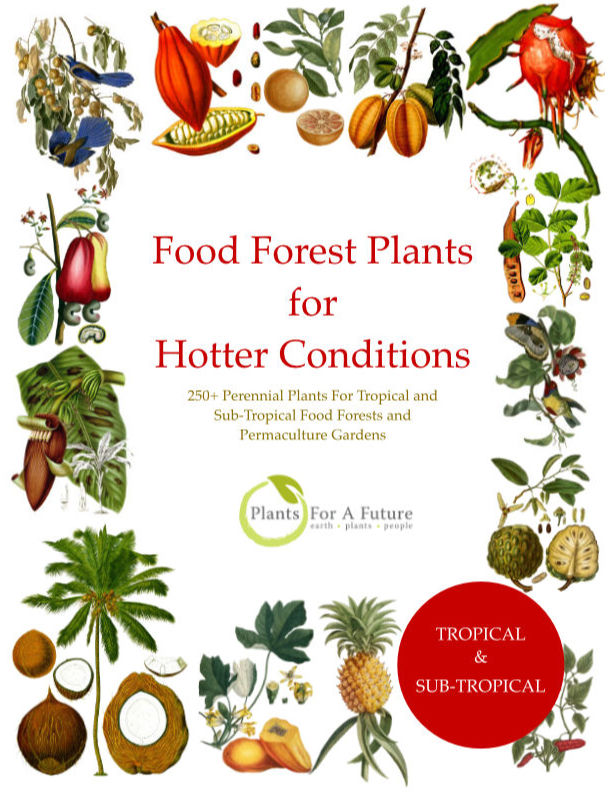
Edible Tropical Plants
Food Forest Plants for Hotter Conditions: 250+ Plants For Tropical Food Forests & Permaculture Gardens.
More
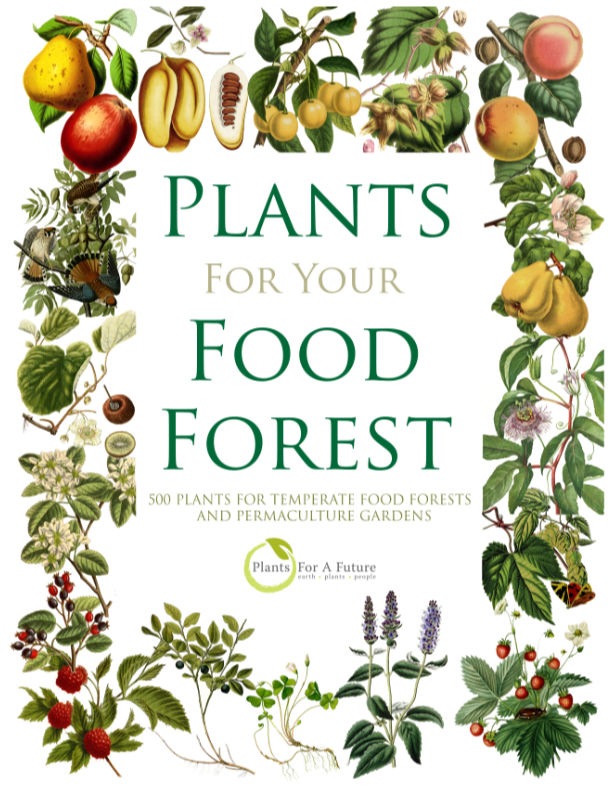
Edible Temperate Plants
Plants for Your Food Forest: 500 Plants for Temperate Food Forests & Permaculture Gardens.
More
More Books
PFAF have eight books available in paperback and digital formats. Browse the shop for more information.
Shop Now
Other Uses
Biomass Compost Dye Fibre Hair Liquid feed Oil Repellent Waterproofing
Agroforestry uses:
Nettle can serve as a beneficial ground cover, preventing soil erosion and improving soil quality through its ability to accumulate nutrients. It also attracts beneficial insects.
A strong flax-like fibre is obtained from the stems[200]. Used for making string and cloth[1, 4, 6, 13, 36], it also makes a good quality paper[115]. It is harvested as the plant begins to die down in early autumn and is retted before the fibres are extracted[4, 99]. The fibre is produced in less abundance than from flax (Linun usitatissimum) and is also more difficult to extract[4]. The plant matter left over after the fibres have been extracted are a good source of biomass and have been used in the manufacture of sugar, starch, protein and ethyl alcohol[4]. An oil obtained from the seeds is used as an illuminant[4]. An essential ingredient of 'QR' herbal compost activator[32]. This is a dried and powdered mixture of several herbs that can be added to a compost heap in order to speed up bacterial activity and thus shorten the time needed to make the compost[K]. The leaves are also an excellent addition to the compost heap[12, 18, 20] and they can be soaked for 7 - 21 days in water to make a very nutritious liquid feed for plants[54]. This liquid feed is both insect repellent and a good foliar feed[14, 18, 53]. The growing plant increases the essential oil content of other nearby plants, thus making them more resistant to insect pests[18, 20, 54]. Although many different species of insects feed on nettles, flies are repelled by the plant so a bunch of freshly cut stems has been used as a repellent in food cupboards[4]. The juice of the plant, or a decoction formed by boiling the herb in a strong solution of salt, will curdle milks and thus acts as a rennet substitute[4]. This same juice, if rubbed into small seams of leaky wooden tubs, will coagulate and make the tub watertight again[4]. A hair wash is made from the infused leaves and this is used as a tonic and antidandruff treatment[172, 201]. A beautiful and permanent green dye is obtained from a decoction of the leaves and stems[4, 115]. A yellow dye is obtained from the root when boiled with alum[4, 115]. A dynamic accumulator gathers minerals or nutrients from the soil and stores them in a more bioavailable form - used as fertilizer or to improve mulch. 1. Nectary - Flowers rich in nectar and pollen:
Yes – Nettle produces small flowers that are attractive to various pollinators, providing nectar and pollen.
2. Wildlife - Food (Fruit, Seeds, Leaf Litter, Shelter, Nesting, Roosting):
Yes – Nettle leaves are edible and nutritious for humans and wildlife. They are particularly beneficial for caterpillars and other insects, providing food and habitat. The dense growth can offer shelter but is not typically used for nesting.
3. Invertebrate Shelter (Overwintering sites, Leaf litter, Groundcover):
Yes – Nettle can provide a habitat for various invertebrates. Its dense foliage contributes to leaf litter, which can support beneficial insects, and it acts as ground cover in suitable conditions.
4. Pest Confuser (Smell):
No – While nettle does have a strong odor, it is not typically used as a pest confuser. Instead, it is more known for its ability to attract beneficial insects that can help control pest populations.
Special Uses
Attracts Wildlife Carbon Farming Dynamic accumulator Food Forest
References More on Other Uses
Cultivation details
Industrial Crop: Fiber Management: Hay Regional Crop Staple Crop: Protein
Prefers a soil rich in phosphates and nitrogen. Plants must be grown in a deep rich soil if good quality fibre is required[4, 115]. Nettles are one of the most undervalued of economic plants. They have a wide range of uses, for food, medicines, fibres etc and are also a very important plant for wildlife. There are at least 30 species of insects that feed on it and the caterpillars of several lepidoptera species are dependant upon it for food[30]. Especially when growing in rich soils, the plant can spread vigorously and is very difficult to eradicate. It is said that cutting the plant down three times a year for three years will kill it[4]. It is a good companion plant to grow in the orchard and amongst soft fruit[53, 54]. So long as it is not allowed to totally over-run the plants, it seems to improve the health of soft fruit that grows nearby and also to protect the fruit from birds, but it makes harvesting very difficult. Dioecious. Male and female plants must be grown if seed is required. The plant is heat tolerant in zones 10 through 1. (Plant Hardiness Zones show how well plants withstand cold winter temperatures.
Plant Heat Zones show when plants would start suffering from the heat.
The Plant Heat Zone map is based on the number of "heat days" experienced in a given area where the temperature climbs to over 86 degrees F (30°C).
At this temperature, many plants begin to suffer physiological damage. Heat Zones range from 1 (no heat days) to 12 (210 or more heat days).
For example Heat Zone. 11-1 indicates that the plant is heat tolerant in zones 11 through 1.) For polyculture design as well as the above-ground architecture (form - tree, shrub etc. and size shown above) information on the habit and root pattern is also useful and given here if available. The plant growth habit is a runner spreading indefinitely by rhizomes or stolons [1-2]. The root pattern is fibrous dividing into a large number of fine roots [1-2]. The root pattern is rhizomatous with underground stems sending roots and shoots along their length [1-2]. The leaves and young shoots are typically harvested in spring, before flowering, from early spring to late spring.
Stinging nettle usually flowers from late spring to summer, around June to August (Northern Hemisphere). Stinging nettle grows quickly and can reach its full height within a single growing season, making it a vigorous and robust plant.
Carbon Farming
-
Industrial Crop: Fiber
Clothing, rugs, sheets, blankets etc. Currently, almost none of our fiber are produced from perennial crops but could be!
-
Management: Hay
Cut to the ground and harvested annually. Non-destructive management systems maintaining the soil organic carbon.
-
Regional Crop
These crops have been domesticated and cultivated regionally but have not been adopted elsewhere and are typically not traded globally, Examples in this broad category include perennial cottons and many nuts and staple fruits.
-
Staple Crop: Protein
(16+ percent protein, 0-15 percent oil). Annuals include beans, chickpeas, lentils, cowpeas, and pigeon peas. Perennials include perennial beans, nuts, leaf protein concentrates, and edible milks.
References Carbon Farming Information and Carbon Sequestration Information
Temperature Converter
Type a value in the Celsius field to convert the value to Fahrenheit:
Fahrenheit:
The PFAF Bookshop
Plants For A Future have a number of books available in paperback and digital form. Book titles include Edible Plants, Edible Perennials, Edible Trees,Edible Shrubs, Woodland Gardening, and Temperate Food Forest Plants. Our new book is Food Forest Plants For Hotter Conditions (Tropical and Sub-Tropical).
Shop Now
Plant Propagation
Seed - sow spring in a cold frame, only just covering the seed. Prick out the seedlings into individual pots when they are large enough to handle, and plant them out in the summer. Division succeeds at almost any time in the growing season. Very easy, plant them straight out into their permanent positions.
Other Names
If available other names are mentioned here
Achoka, Bichhu booti, Bichhua, Bichua, Chichru, Irhawurhawu, Kopriva, Korvenoges, Krapiva, Noges, Patle sishnu, Pokrzywa, Polo, Raudnoges, Sishnu, Sisnu, Tall nettle, Zara, Zastisod, Zocha, american stinging nettle, brandnetelwortel, brennessel, brennesselblätter, brennesselwurzel, brennnesselwurzel, brännässelrot, brännässla, brännässleblad, brændenælderod, california nettle, chalkan, chayan oot, chhoku, chichicaste, chule, chutle, common nettle, common stinging nettle for homoeopathic preparations, csalángyökér, csalánlevé, dhyo, european nettle, european stinging nettle, folia urticae, gazanda, gazaneh, gazgazuk, giant nettle, grande ortie, great nettle, greater nettle, grosse brennessel, große brennessel, gherq il-hurrieq, haarnesselwurzel, hanfnesselwurzel, hhurrayq, horeig, hyo, jhaduk, kajyang, kichitki oot, kopriva, koprivový koren, korenina koprive, korzen pokrzywy, krapiva dvudomnaya, nelau, neslerot, nesselwurzel, nettle, nettle herb, nettle leaf, nettle root, nettle stinging, nhyakan, nokkonen, juuri, nõgesejuur, natru saknes, ortica, ortica maschio, ortica radice, ortie, ortie (feuille d’), ortie (racine d'), ortie brulante, ortie dioïque, ortiga, ortiga mayor, ortiga, hoja, ortiga, raíz de, pokrzywa, polo, pulu, prhlavový koren, qurrays, racine d'ortie, radix urticae, raiz de ortiga, radacina de urzica, satu, sikya, sisna, sisnu, slender nettle, stinging nettle, stinging nettle herb, syak, tall nettle, tsuknida, urtica dioica, urtica dioica ad praeparationes homoeopathicas, urtica dioica ad praeparationes homoeopathicas, urticae folium, urticae herba, urticae radix, urtiga, urtiga, raiz, urtiga-maior, urtiga-mansa, urtiga-vermelha, urtigão, yi zhu qian ma, za-chhag, zwa, zwyczajna, isirgan.
Native Range
TEMPERATE ASIA: Armenia, Azerbaijan, China, Ciscaucasia, Cyprus, Dagestan, Eastern Siberia, Gansu Sheng (east), Georgia, Iran, Iraq, Lebanon, Qinghai Sheng, Russian Federation, Russian Federation-Ciscaucasia, Russian Federation-Eastern Siberia, Russian Federation-Western Siberia, Sichuan Sheng (northwest), Syria, Turkey, Western Siberia, Xinjiang Uygur Zizhiqu (west), Xizang Zizhiqu,Afghanistan. TROPICAL ASIA: Bhutan, India (north), Nepal, Pakistan, NORTHERN AMERICA: Canada, Northwest Territories (southwest), Yukon, Québec, Nova Scotia, Ontario, Prince Edward Island, New Brunswick, Newfoundland and Labrador, Saskatchewan, Alberta, Manitoba, British Columbia, St. Pierre and Miquelon, United States, Alaska, Connecticut, Indiana, Maine, Massachusetts, Michigan, New Hampshire, New Jersey, New York, Ohio, Pennsylvania, Rhode Island, Vermont, West Virginia, Illinois, Iowa, Kansas, Minnesota, Missouri, Nebraska, North Dakota, Oklahoma, South Dakota, Wisconsin, Colorado, Idaho, Montana, Oregon, Washington, Wyoming, Alabama (northeast), Delaware, Georgia (north), Kentucky, Louisiana, Maryland, Mississippi (west), North Carolina (west), Tennessee, Virginia, New Mexico, Texas, Arizona, California, Nevada, Utah, Mexico, Sonora, Baja California (Norte), EUROPE: Denmark, Finland, United Kingdom (U.K.), Ireland, Iceland, Norway, Sweden, Austria, Belgium, Switzerland, Czech Republic, Germany, Hungary, Netherlands, Poland, Slovakia, Russian Federation-European part, European part, Belarus, Estonia, Lithuania, Latvia, Moldova, Ukraine (incl. Krym), Albania, Bulgaria, Greece, Croatia, Italy (incl. Sardinia, Sicily), North Macedonia, Romania, Slovenia, Spain, France (incl. Corsica), AFRICA: Algeria, Libya, Morocco, Tunisia.
Weed Potential
Right plant wrong place. We are currently updating this section.
Please note that a plant may be invasive in one area but may not in your area so it's worth checking.
Conservation Status
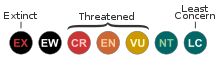
IUCN Red List of Threatened Plants Status : Status: Least Concern
| Related Plants
|
| Latin Name | Common Name | Habit | Height | Hardiness | Growth | Soil | Shade | Moisture | Edible | Medicinal | Other |
| Boehmeria cylindrica | False Nettle, Smallspike false nettle | Perennial | 1.0 |
0-0
| | LM | SN | M | 0 | 0 | 1 |
| Boehmeria glomerulifera | | Shrub | 4.0 |
-
| | LM | SN | DM | 0 | 0 | 2 |
| Boehmeria longispica | | Shrub | 1.2 |
-
| | LM | SN | M | 1 | 1 | 1 |
| Boehmeria macrophylla | | Shrub | 2.5 |
-
| | LM | SN | DM | 0 | 0 | 2 |
| Boehmeria nipononivea | Ramie | Perennial | 1.5 |
-
| | LM | SN | M | 1 | 1 | 2 |
| Boehmeria nivea | Ramie, Chinese Grass, Chinese Silk Plant | Perennial | 1.8 |
6-9
| | L | SN | DM | 2 | 2 | 5 |
| Boehmeria spicata | | Shrub | 1.0 |
-
| | LM | SN | M | 1 | 0 | 2 |
| Boehmeria tricuspis | | Perennial | 0.8 |
-
| | LM | SN | M | 1 | 1 | 3 |
| Cecropia peltata | Trumpet Tree, Snakewood, Congo pump, Wild pawpaw, Pop-a-gun | Tree | 20.0 |
9-12
| F | LMH | N | M | 3 | 3 | 5 |
| Debregeasia edulis | | Shrub | 0.0 |
0-0
| | LMH | S | M | 2 | 1 | 0 |
| Debregeasia hypoleuca | | Shrub | 5.0 |
7-10
| | LMH | S | M | 2 | 0 | 2 |
| Debregeasia longifolia | Wild Rhea | Shrub | 5.0 |
7-10
| | LMH | S | M | 1 | 1 | 2 |
| Debregeasia wallichiana | | Tree | 5.0 |
-
| | LMH | S | M | 0 | 0 | 1 |
| Elatostema cuneatum | | Annual | 0.3 |
-
| | LMH | S | M | 1 | 0 | |
| Elatostema dissectum | | Perennial | 0.7 |
-
| | LMH | SN | M | 1 | 0 | |
| Elatostema laetevirens | | Perennial | 0.3 |
-
| | LMH | S | M | 1 | 0 | |
| Girardinia diversifolia | Himalayan Nettle | Annual/Perennial | 3.0 |
-
| | LMH | SN | M | 2 | 2 | 2 |
| Gonostegia hirta | | Perennial | 1.0 |
-
| | LMH | SN | M | 0 | 2 | |
| Laportea bulbifera | | Perennial | 0.6 |
-
| | LMH | SN | M | 3 | 0 | 2 |
| Laportea canadensis | Canadian Wood Nettle | Perennial | 1.0 |
0-0
| | LMH | SN | M | 3 | 1 | 2 |
| Laportea macrostachya | | Perennial | 0.8 |
-
| | LMH | SN | M | 3 | 0 | 2 |
| Musanga cecropioides | Corkwood | Tree | 20.0 |
10-12
| F | LMH | N | M | 3 | 4 | 4 |
| Myrianthus arboreus | Giant yellow mulberry, Monkeyfruit | Tree | 15.0 |
10-12
| M | LMH | N | MWe | 4 | 3 | 2 |
| Oreocnide integrifolia | Wild Rhea | Tree | 12.0 |
10-12
| S | LMH | FS | MWe | 0 | 0 | 4 |
| Parietaria judaica | Pellitory Of The Wall, Spreading pellitory | Perennial | 0.6 |
0-0
| | LMH | SN | DM | 2 | 3 | 1 |
| Parietaria officinalis | Pellitory Of The Wall, Upright pellitory | Perennial | 0.6 |
0-0
| | LMH | SN | DM | 2 | 3 | 1 |
| Pourouma cecropiifolia | Amazon Grape | Tree | 15.0 |
10-12
| F | MH | SN | M | 4 | 2 | 2 |
| Touchardia latifolia | Olona | Shrub | 2.0 |
10-12
| S | LMH | FS | MWe | 0 | 0 | 4 |
| Urera baccifera | Nettle Tree, Chichaste, Ortiga | Shrub | 4.0 |
10-12
| F | LMH | SN | MWe | 0 | 2 | 4 |
| Urtica angustifolia | | Perennial | 1.5 |
-
| | LMH | SN | M | 3 | 0 | 3 |
|
|
Growth: S = slow M = medium F = fast. Soil: L = light (sandy) M = medium H = heavy (clay). pH: A = acid N = neutral B = basic (alkaline). Shade: F = full shade S = semi-shade N = no shade. Moisture: D = dry M = Moist We = wet Wa = water.
Now available:
Food Forest Plants for Mediterranean Conditions
350+ Perennial Plants For Mediterranean and Drier Food Forests and Permaculture Gardens.
[Paperback and eBook]
This is the third in Plants For A Future's series of plant guides for food forests tailored to
specific climate zones. Following volumes on temperate and tropical ecosystems, this book focuses
on species suited to Mediterranean conditions—regions with hot, dry summers and cool, wet winters,
often facing the added challenge of climate change.
Read More
Expert comment
Author
L.
Botanical References
17200
Links / References
For a list of references used on this page please go here
A special thanks to Ken Fern for some of the information used on this page.
Readers comment