Translate this page:
Summary
Symphytum species
Comfrey leaves, young shoots, and roots are edible, though the texture and hairiness of the leaves may not appeal to everyone. When added to salads, young leaves are eaten raw or cooked and are chopped finely to reduce their hairiness. Young shoots are asparagus substitutes, and blanched stalks are edible. Older leaves can be dried and made into tea, and the peeled roots can be added to soups. Roasted roots are mixed with dandelion and chicory roots for a coffee substitute.
Comfrey is a popular herbal medicine with a long history of use. The root and leaves are used, though the root is considered more potent. Externally, comfrey treats cuts, bruises, sprains, sores, eczema, varicose veins, and broken bones; internally, it treats pulmonary complaints and internal bleeding. Comfrey is often applied as a poultice and is highly regarded for its ability to promote wound healing and bone regeneration.
Comfrey is very adaptable and tolerates most soils and conditions but thrives best in moist soil with some shade. It also grows well in heavy clay soils. The plant can be invasive, often spreading through self-sown seeds and via its deep root system. Comfrey proliferates and can be cut several times a year, making it an excellent plant for producing mulch or liquid fertiliser. When used as mulch, comfrey immediately boosts nutrients to crops, especially those with high potassium demands. Additionally, its dynamic accumulator ability makes it valuable in compost heaps, as it collects minerals deep in the soil and releases them in a more bioavailable form.
Comfrey is native to regions across Europe and Asia, including Austria, Belgium, France, Germany, Italy, Spain, Turkey, Kazakhstan, Russia, and the Caucasus.
Harvesting: Leaves in late spring to early summer when they are young and tender. It can produce multiple harvests per growing season.
Bloom Color: Blue, Pink, White. Main Bloom Time: Early summer, Late summer, Late spring, Mid summer. Form: Upright or erect.
Physical Characteristics

 Symphytum officinale is a PERENNIAL growing to 1.2 m (4ft) by 0.6 m (2ft in) at a fast rate.
See above for USDA hardiness. It is hardy to UK zone 5 and is not frost tender. It is in flower from May to June, and the seeds ripen from June to July. The species is hermaphrodite (has both male and female organs) and is pollinated by Bees. The plant is self-fertile.
Suitable for: light (sandy), medium (loamy) and heavy (clay) soils and can grow in heavy clay soil. Suitable pH: mildly acid, neutral and basic (mildly alkaline) soils. It can grow in semi-shade (light woodland) or no shade. It prefers moist soil.
UK Hardiness Map
US Hardiness Map
Synonyms
Plant Habitats
Woodland Garden Sunny Edge; Dappled Shade; Shady Edge; Hedgerow; Cultivated Beds;
Edible Uses
Edible Parts: Leaves Shoots
Edible Uses: Gum Tea
Young leaves - cooked or raw[2, 4, 5, 9, 46, 61]. The leaf is hairy and the texture is mucilaginous. It may be full of minerals but it is not pleasant eating for most tastes. It can be chopped up finely and added to salads, in this way the hairiness is not so obvious[183, K]. Young shoots can be used as an asparagus substitute[46]. The blanched stalks are used[183]. Older leaves can be dried and used as a tea[26]. The peeled roots are cut up and added to soups[183]. A tea is made from the dried leaves and roots[183]. The roasted roots are used with dandelion and chicory roots for making coffee[183].
References More on Edible Uses
Medicinal Uses
Plants For A Future can not take any responsibility for any adverse effects from the use of plants. Always seek advice from a professional before using a plant medicinally.
Anodyne Antidiarrhoeal Antirheumatic Astringent Demulcent Eczema Emollient Expectorant
Haemostatic Homeopathy Refrigerant Vulnerary
Comfrey is a commonly used herbal medicine with a long and proven history in the treatment of various complaints. The root and the leaves are used, the root being more active, and they can be taken internally or used externally as a poultice[4, 222]. Comfrey is especially useful in the external treatment of cuts, bruises, sprains, sores, eczema, varicose veins, broken bones etc, internally it is used in the treatment of a wide range of pulmonary complaints, internal bleeding etc[4, 238, K]. The plant contains a substance called 'allantoin', a cell proliferant that speeds up the healing process[4, 21, 26, 165, 222, 238]. This substance is now synthesized in the pharmaceutical industry and used in healing creams[238]. The root and leaves are anodyne, astringent (mild), demulcent, emollient, expectorant, haemostatic, refrigerant, vulnerary[4, 21, 26, 165, 222]. Some caution is advised, however, especially in the internal use of the herb. External applications and internally taken teas or tinctures of the leaves are considered to be completely safe, but internal applications of tablets or capsules are felt to have too many drawbacks for safe usage[238]. See also the notes above on toxicity. The leaves are harvested in early summer before the plant flowers, the roots are harvested in the autumn. Both are dried for later use[238]. A homeopathic remedy is made from the fresh root, harvested before the plant flowers[232]. This has a very limited range of application, but is of great benefit in the treatment of broken bones and eye injuries[232]. The German Commission E Monographs, a therapeutic guide to herbal medicine, approve Symphytum officinale for blunt injuries (see [302] for critics of commission E).
References More on Medicinal Uses
The Bookshop: Edible Plant Books
Our Latest books on Perennial Plants For Food Forests and Permaculture Gardens in paperback or digital formats.
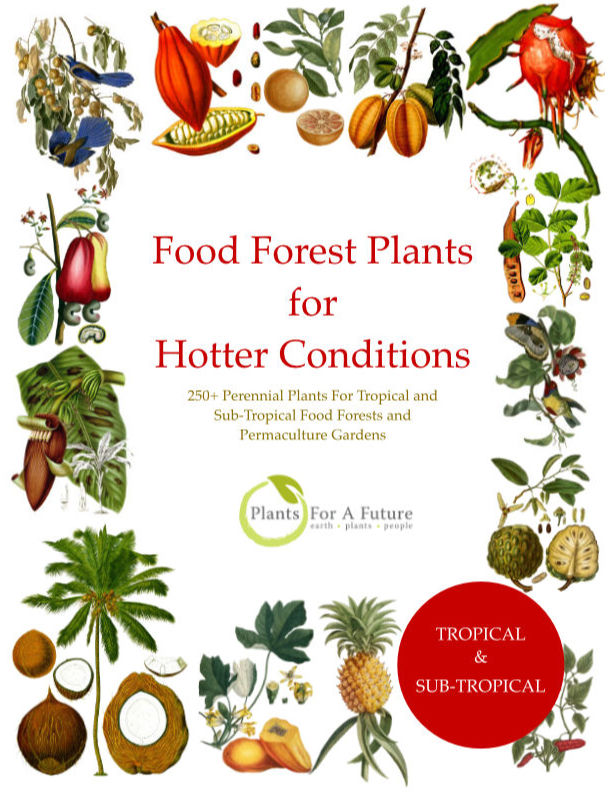
Edible Tropical Plants
Food Forest Plants for Hotter Conditions: 250+ Plants For Tropical Food Forests & Permaculture Gardens.
More
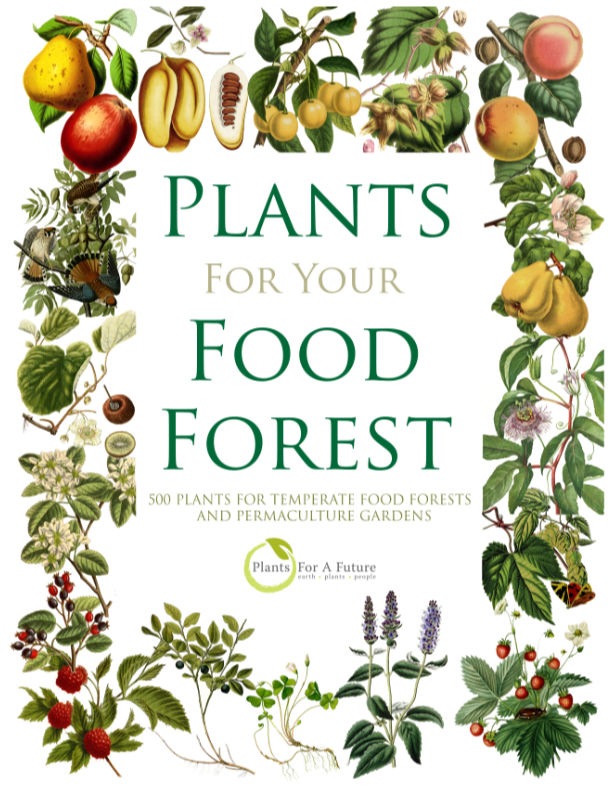
Edible Temperate Plants
Plants for Your Food Forest: 500 Plants for Temperate Food Forests & Permaculture Gardens.
More
More Books
PFAF have eight books available in paperback and digital formats. Browse the shop for more information.
Shop Now
Other Uses
Biomass Compost Gum
Agroforestry uses:
Comfrey is an excellent dynamic accumulator, gathering nutrients from deep in the soil and making them available in a more bioavailable form. It can also be used as mulch, for composting, and as a green manure crop.
Landscape Uses:Border, Ground cover, Specimen. The plant grows very quickly, producing a lot of bulk. It is tolerant of being cut several times a year and can be used to provide 'instant compost' for crops such as potatoes. Simply layer the wilted leaves at the bottom of the potato trench or apply them as a mulch in no-dig gardens. A liquid feed can be obtained by soaking the leaves in a small amount of water for a week, excellent for potassium demanding crops such as tomatoes. The leaves are also a very valuable addition to the compost heap[26, 200]. A gum obtained from the roots was at one time used in the treatment of wool before it was spun[100]. A dynamic accumulator gathering minerals or nutrients from the soil and storing them in a more bioavailable form - used as fertilizer or to improve mulch. 1. Nectary - Flowers rich in nectar and pollen:
Yes – Comfrey flowers are known to attract pollinators, including bees, due to their nectar-rich blooms.
2. Wildlife - Food (Fruit, Seeds, Leaf litter, Shelter, Nesting, Roosting):
No – While comfrey leaves can be used in herbal remedies and as fodder for livestock, the plant does not produce fruit or seeds that are a significant food source for wildlife. However, it can provide some shelter with its dense foliage.
3. Invertebrate Shelter (Overwintering sites, Leaf litter, Groundcover):
Yes – Comfrey can provide shelter for beneficial insects and overwintering sites in its leaf litter. Its broad leaves can help create a microhabitat for various invertebrates.
4. Pest Confuser (Smell):
No – Comfrey does not have strong aromatic properties that would serve to confuse pests.
Special Uses
Dynamic accumulator Food Forest
References More on Other Uses
Cultivation details
Tolerates most soils and situations but prefers a moist soil and some shade[1, 4]. Grows well in heavy clay soils. Best grown in an open sunny site in a deep rich soil if it is being grown for compost material[200]. Plants can be invasive, often spreading freely by means of self-sown seed. The root system is very deep and difficult to eradicate, even small fragments of root left in the soil can produce new plants. Special Features:Attractive foliage, Edible, Fragrant foliage, Not North American native, Invasive, Naturalizing. The plant is heat tolerant in zones 9 through 1. (Plant Hardiness Zones show how well plants withstand cold winter temperatures.
Plant Heat Zones show when plants would start suffering from the heat.
The Plant Heat Zone map is based on the number of "heat days" experienced in a given area where the temperature climbs to over 86 degrees F (30°C).
At this temperature, many plants begin to suffer physiological damage. Heat Zones range from 1 (no heat days) to 12 (210 or more heat days).
For example Heat Zone. 11-1 indicates that the plant is heat tolerant in zones 11 through 1.) For polyculture design as well as the above-ground architecture (form - tree, shrub etc. and size shown above) information on the habit and root pattern is also useful and given here if available. The plant growth habit is a clumper with limited spread [1-2]. The root pattern is fibrous dividing into many fine roots [1-2]. The root pattern is fleshy. Thick or swollen - fibrous or tap root [1-2]. The leaves can be harvested in late spring to early summer (May to June, Northern Hemisphere) when they are young and tender.
Comfrey flowers from late spring to early summer (May to June, Northern Hemisphere). Comfrey is a fast-growing perennial herb, capable of reaching full size within a few months of planting. It can produce multiple harvests per growing season. Symphytum officinale (Common Comfrey) is self-fertile, meaning it can produce seeds from its pollen without cross-pollination. However, it is also pollinated by bees and other insects, which can enhance seed production. Many comfrey cultivars, especially Bocking 14, are sterile and do not set seed, but the wild-type species can self-fertilise.
References Carbon Farming Information and Carbon Sequestration Information
Temperature Converter
Type a value in the Celsius field to convert the value to Fahrenheit:
Fahrenheit:
The PFAF Bookshop
Plants For A Future have a number of books available in paperback and digital form. Book titles include Edible Plants, Edible Perennials, Edible Trees,Edible Shrubs, Woodland Gardening, and Temperate Food Forest Plants. Our new book is Food Forest Plants For Hotter Conditions (Tropical and Sub-Tropical).
Shop Now
Plant Propagation
Seed - sow spring or autumn in a cold frame. When they are large enough to handle, prick the seedlings out into individual pots and grow them on in the greenhouse for their first winter. Plant them out into their permanent positions in late spring or early summer, after the last expected frosts. If you have sufficient seed you can try an outdoor sowing in situ in the spring. Division succeeds at almost any time of the year. Simply use a spade to chop off the top 7cm of root just below the soil level. The original root will regrow and you will have a number of root tops, each of which will make a new plant. These can either be potted up or planted out straight into their permanent positions.
Other Names
If available other names are mentioned here
Native Range
TEMPERATE ASIA: Ciscaucasia, Kazakhstan, Russian Federation-Ciscaucasia, Russian Federation-Western Siberia, Western Siberia (west),Turkey. EUROPE: United Kingdom (U.K.), Austria, Belgium, Switzerland, Czech Republic, Germany, Hungary, Netherlands, Poland, Slovakia, Russian Federation-European part, European part, Belarus, Moldova, Ukraine (incl. Krym), Bulgaria, Croatia, Italy (incl. Sardinia, Sicily), Romania, Serbia, Slovenia, Spain, France,
Weed Potential
Right plant wrong place. We are currently updating this section.
Please note that a plant may be invasive in one area but may not in your area so it's worth checking.
Conservation Status
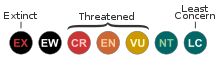
IUCN Red List of Threatened Plants Status :
Growth: S = slow M = medium F = fast. Soil: L = light (sandy) M = medium H = heavy (clay). pH: A = acid N = neutral B = basic (alkaline). Shade: F = full shade S = semi-shade N = no shade. Moisture: D = dry M = Moist We = wet Wa = water.
Now available:
Food Forest Plants for Mediterranean Conditions
350+ Perennial Plants For Mediterranean and Drier Food Forests and Permaculture Gardens.
[Paperback and eBook]
This is the third in Plants For A Future's series of plant guides for food forests tailored to
specific climate zones. Following volumes on temperate and tropical ecosystems, this book focuses
on species suited to Mediterranean conditions—regions with hot, dry summers and cool, wet winters,
often facing the added challenge of climate change.
Read More
Expert comment
Author
L.
Botanical References
17200
Links / References
For a list of references used on this page please go here
Readers comment