 |
|
http://commons.wikimedia.org/ |
 |
| http://fr.wikipedia.org/wiki/Utilisateur:Jonathaneo |
Translate this page:
Summary
Physical Characteristics

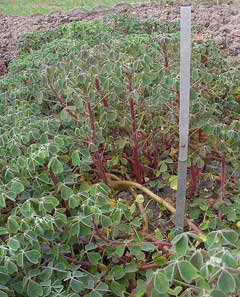
 Oxalis tuberosa is a PERENNIAL growing to 0.5 m (1ft 8in) by 0.3 m (1ft).
See above for USDA hardiness. It is hardy to UK zone 7 and is not frost tender. It is in flower from July to August. The species is hermaphrodite (has both male and female organs) and is pollinated by Insects.
Suitable for: light (sandy) and medium (loamy) soils and prefers well-drained soil. Suitable pH: mildly acid, neutral and basic (mildly alkaline) soils. It cannot grow in the shade. It prefers moist soil.
UK Hardiness Map
US Hardiness Map
Synonyms
O. crenata.
Plant Habitats
Cultivated Beds;
Edible Uses
Edible Parts: Flowers Leaves Root
Edible Uses:
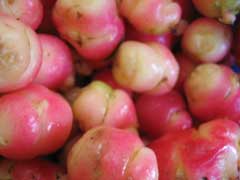
Tubers - raw or cooked[2, 103, 183]. An acid lemon flavour when first harvested, if left out in the sun the tubers turn sweet[183], so sweet in some varieties that they are said to resemble dried figs and are sold as fruits in local markets in S. America[34, 37, 97, 196]. The cooked root is delicious whether in its sweet or acid state, it can be boiled, baked etc in similar ways to potatoes[K]. The tubers tend to be rather smaller than potatoes, with good sized specimens reaching 8cm or more in length. The slightly waxy skin makes cleaning them very easy[K]. They contain about 70 - 80% moisture, 11 - 22% carbohydrate, 1% fat, 1% fibre and 1% ash[196]. The carbohydrate is rich in sugar and easy to digest[196]. Acid types are rich in oxalic acid (up to 500ppm) but sweet forms have much less oxalic acid than is found in potatoes[196]. Edible young leaves and flowers - raw or cooked[34, 37, 103]. Poor quality[33]. Use in moderation, see notes at top of sheet,
References More on Edible Uses
Medicinal Uses
Plants For A Future can not take any responsibility for any adverse effects from the use of plants. Always seek advice from a professional before using a plant medicinally.
None known
References More on Medicinal Uses
The Bookshop: Edible Plant Books
Our Latest books on Perennial Plants For Food Forests and Permaculture Gardens in paperback or digital formats.
Edible Tropical Plants
Food Forest Plants for Hotter Conditions: 250+ Plants For Tropical Food Forests & Permaculture Gardens.
More
Edible Temperate Plants
Plants for Your Food Forest: 500 Plants for Temperate Food Forests & Permaculture Gardens.
More
More Books
PFAF have eight books available in paperback and digital formats. Browse the shop for more information.
Shop Now
Other Uses
References More on Other Uses
Cultivation details
Prefers a light rich soil in a warm sunny position[1, 37, 196]. Tolerates a pH range from 5.3 to 7.8[196]. Plants succeed in areas with an average rainfall ranging from 570 - 2150mm per year[196]. Oka is widely cultivated in the Andes for its edible tubers, there are many named varieties[33, 97]. This species has an excellent potential as a major root crop in temperate zones, it has the potential to yield as highly as potatoes but does not have the susceptibility to pests and diseases that are a bugbane for potato growers[K]. Plants are slightly more hardy than the potato, tolerating light frosts but the top-growth being severely damaged or killed by temperatures much below freezing. The main drawback is that development of the tubers is initiated by the number of hours of daylight in a day. In Britain this means that tubers do not begin to form until after the 21st of September and, if there are early frosts in the autumn, yields will be low[37]. There are possibly some forms in southern Chile that are not sensitive to daylength, these will be more suitable to higher latitudes such as Britain[196]. It is said that the varieties with white tubers are bitter because they contain calcium oxylate crystals whilst those with tubers that are of other colours are sweet[97]. However, we are growing one variety with white tubers and it most certainly is not bitter[K]. Yields tend to average about 7 - 10 tonnes per hectare but experimentally yields of 40 tonnes per hectare have been achieved[196]. Earthing up the growing stems as they start to form tubers can increase yields significantly[196].
References Carbon Farming Information and Carbon Sequestration Information
Temperature Converter
Type a value in the Celsius field to convert the value to Fahrenheit:
Fahrenheit:
The PFAF Bookshop
Plants For A Future have a number of books available in paperback and digital form. Book titles include Edible Plants, Edible Perennials, Edible Trees,Edible Shrubs, Woodland Gardening, and Temperate Food Forest Plants. Our new book is Food Forest Plants For Hotter Conditions (Tropical and Sub-Tropical).
Shop Now
Plant Propagation
Seed - best sown as soon as it is ripe in a cold frame. Prick out the seedlings into individual pots when they are large enough to handle and plant them out in late spring or early summer. Seed is not usually produced in Britain. Harvest the tubers in late autumn after the frosts have killed off top growth. Store in a cool dry frost free place and plant out in April. Basal cuttings in spring[196]. Harvest the shoots with plenty of underground stem when they are about 8 - 10cm above the ground. Pot them up into individual pots and keep them in light shade in a cold frame or greenhouse until they are rooting well. Plant them out in the summer.
Other Names
If available other names are mentioned here
Native Range
Coming Soon
Weed Potential
Right plant wrong place. We are currently updating this section.
Please note that a plant may be invasive in one area but may not in your area so it's worth checking.
Conservation Status
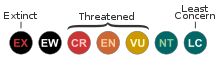
IUCN Red List of Threatened Plants Status :
Growth: S = slow M = medium F = fast. Soil: L = light (sandy) M = medium H = heavy (clay). pH: A = acid N = neutral B = basic (alkaline). Shade: F = full shade S = semi-shade N = no shade. Moisture: D = dry M = Moist We = wet Wa = water.
Now available:
Food Forest Plants for Mediterranean Conditions
350+ Perennial Plants For Mediterranean and Drier Food Forests and Permaculture Gardens.
[Paperback and eBook]
This is the third in Plants For A Future's series of plant guides for food forests tailored to
specific climate zones. Following volumes on temperate and tropical ecosystems, this book focuses
on species suited to Mediterranean conditions—regions with hot, dry summers and cool, wet winters,
often facing the added challenge of climate change.
Read More
Expert comment
Author
Molina.
Botanical References
200
Links / References
For a list of references used on this page please go here
Readers comment