 |
|
http://www.hear.org/starr/ |
 |
|
Translate this page:
Summary
Bloom Color: White. Main Bloom Time: Early summer, Early fall, Late summer, Mid summer. Form: Upright or erect.
Physical Characteristics

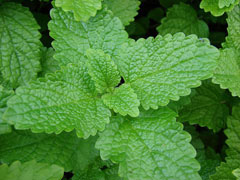
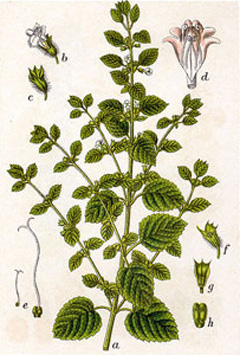
 Melissa officinalis is a PERENNIAL growing to 0.7 m (2ft 4in) by 0.4 m (1ft 4in) at a fast rate.
See above for USDA hardiness. It is hardy to UK zone 4 and is not frost tender. It is in flower from June to October, and the seeds ripen from August to October. The species is hermaphrodite (has both male and female organs) and is pollinated by Bees.
It is noted for attracting wildlife.
Suitable for: light (sandy) and medium (loamy) soils and prefers well-drained soil. Suitable pH: mildly acid, neutral and basic (mildly alkaline) soils. It can grow in semi-shade (light woodland) or no shade. It prefers dry or moist soil and can tolerate drought.
UK Hardiness Map
US Hardiness Map
Synonyms
Faucibarba officinalis. Mutelia officinalis. Thymus melissa.
Plant Habitats
Woodland Garden Sunny Edge; Dappled Shade; Shady Edge;
Edible Uses
Edible Parts: Leaves
Edible Uses: Condiment Tea
Leaves - raw or cooked. A pleasant lemon-like aroma and flavour, they are used mainly as a flavouring in salads and cooked foods[5, 7, 8, 9, 14, 27, 183]. A lemon-flavoured tea can be made from the fresh or dried leaves[21, 183]. A bunch of the leaves can be added to china tea, much improving the flavour, the leaves are also added to fruit cups etc[4]. They are used as a flavouring in various alcoholic beverages including Chartreuse and Benedictine[238].
References More on Edible Uses
Medicinal Uses
Plants For A Future can not take any responsibility for any adverse effects from the use of plants. Always seek advice from a professional before using a plant medicinally.
Antianxiety Antibacterial Antidepressant Antiemetic Antispasmodic Antiviral Aromatherapy Carminative
Diaphoretic Digestive Emmenagogue Febrifuge Sedative Tonic
Lemon balm is a commonly grown household remedy with a long tradition as a tonic remedy that raises the spirits and lifts the heart[254]. Modern research has shown that it can help significantly in the treatment of cold sores[254]. The leaves and young flowering shoots are antibacterial, antispasmodic, antiviral, carminative, diaphoretic, digestive, emmenagogue, febrifuge, sedative, and tonic[4, 7, 9, 21, 165, 238]. It also acts to inhibit thyroid activity[238]. An infusion of the leaves is used in the treatment of fevers and colds, indigestion associated with nervous tension, excitability and digestive upsets in children, hyperthyroidism, depression, mild insomnia, headaches etc[4, 9, 238]. Externally, it is used to treat herpes, sores, gout, insect bites and as an insect repellent[238]. The plant can be used fresh or dried, for drying it is harvested just before or just after flowering[9]. The essential oil contains citral and citronella, which act to calm the central nervous system and are strongly antispasmodic[254]. The plant also contains polyphenols, in particular these combat the herpes simplex virus which produces cold sores[254]. The essential oil is used in aromatherapy. Its keyword is 'Female aspects'[210]. It is used to relax and rejuvenate, especially in cases of depression and nervous tension[238]. The German Commission E Monographs, a therapeutic guide to herbal medicine, approve Melissa officinalis for nervousness and insomnia (see [302] for critics of commission E).
References More on Medicinal Uses
The Bookshop: Edible Plant Books
Our Latest books on Perennial Plants For Food Forests and Permaculture Gardens in paperback or digital formats.
Edible Tropical Plants
Food Forest Plants for Hotter Conditions: 250+ Plants For Tropical Food Forests & Permaculture Gardens.
More
Edible Temperate Plants
Plants for Your Food Forest: 500 Plants for Temperate Food Forests & Permaculture Gardens.
More
More Books
PFAF have eight books available in paperback and digital formats. Browse the shop for more information.
Shop Now
Other Uses
Essential Pot-pourri Repellent
Landscape Uses: Border, Container, Rock garden. The growing plant is said to repel flies and ants[14]. It is also rubbed on the skin as a repellent[238], though the essential oil would be more effective here[K]. An essential oil is obtained from the plant[100] (the exact part is not specified, it is probably the entire plant and especially the flowering stems). It is used medicinally. The whole plant is very pleasantly aromatic, the aroma lasting for a long time after the plant has been harvested. It is therefore a very useful ingredient in pot-pourri[4]. A dynamic accumulator gathering minerals or nutrients from the soil and storing them in a more bioavailable form - used as fertilizer or to improve mulch.
Special Uses
Attracts Wildlife Dynamic accumulator Food Forest Scented Plants
References More on Other Uses
Cultivation details
A very easily grown plant, it succeeds in any well-drained soil in a sunny sheltered position[200]. It prefers a light rich moist soil[37, 52],a warm position[27, 37] and partial shade[4]. Once established, this is a drought tolerant species[190, 200], it is a useful plant to try in difficult dry places[187], usually succeeding in the dustiest of soils once it is established[190]. Lemon balm is often grown in the herb garden, and sometimes also commercially[46], there are some named varieties[183]. Plants can often self-sow so freely as to become a menace[187]. If the plants are cut back hard after flowering, they will produce a fresh flush of leaves[238]. Members of this genus are rarely if ever troubled by browsing deer or rabbits[233]. A good bee plant[4, 8, 24]. A good companion plant, especially for brassicas[14]. Special Features:Attractive foliage, Edible, Fragrant foliage, Not North American native, Invasive, Naturalizing, Suitable for cut flowers, Suitable for dried flowers. The plant is heat tolerant in zones 12 through 1. (Plant Hardiness Zones show how well plants withstand cold winter temperatures.
Plant Heat Zones show when plants would start suffering from the heat.
The Plant Heat Zone map is based on the number of "heat days" experienced in a given area where the temperature climbs to over 86 degrees F (30°C).
At this temperature, many plants begin to suffer physiological damage. Heat Zones range from 1 (no heat days) to 12 (210 or more heat days).
For example Heat Zone. 11-1 indicates that the plant is heat tolerant in zones 11 through 1.) For polyculture design as well as the above-ground architecture (form - tree, shrub etc. and size shown above) information on the habit and root pattern is also useful and given here if available. The plant growth habit is a clumper with limited spread [1-2]. The root pattern is fibrous dividing into a large number of fine roots [1-2]. The root pattern is stoloniferous rooting from creeping stems above the ground [1-2].
References Carbon Farming Information and Carbon Sequestration Information
Temperature Converter
Type a value in the Celsius field to convert the value to Fahrenheit:
Fahrenheit:
The PFAF Bookshop
Plants For A Future have a number of books available in paperback and digital form. Book titles include Edible Plants, Edible Perennials, Edible Trees,Edible Shrubs, Woodland Gardening, and Temperate Food Forest Plants. Our new book is Food Forest Plants For Hotter Conditions (Tropical and Sub-Tropical).
Shop Now
Plant Propagation
Seed - sow spring or autumn in a cold frame. Germination can be slow[200]. Prick out the seedlings into individual pots as soon as they are large enough to handle and plant out into their permanent positions when the plants are at least 15cm tall[K]. If there is plenty of seed it can be sown in an outdoor seed bed in April. Plant out into their permanent positions the following spring. Division in spring or autumn[111]. Very easy, larger clumps can be replanted direct into their permanent positions, though it is best to pot up smaller clumps and grow them on in a cold frame until they are rooting well. Plant them out in the spring. Cuttings in July/August.
Other Names
If available other names are mentioned here
Native Plant Search
Search over 900 plants ideal for food forests and permaculture gardens. Filter to search native plants to your area. The plants selected are the plants in our book 'Plants For Your Food Forest: 500 Plants for Temperate Food Forests and Permaculture Gardens, as well as plants chosen for our forthcoming related books for Tropical/Hot Wet Climates and Mediterranean/Hot Dry Climates. Native Plant Search
Found In
Countries where the plant has been found are listed here if the information is available
Weed Potential
Right plant wrong place. We are currently updating this section.
Please note that a plant may be invasive in one area but may not in your area so it’s worth checking.
Known to be an invasive perennial is warmer areas (e.g. US South West). Grow in a tub.
Conservation Status
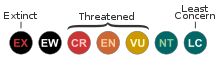
IUCN Red List of Threatened Plants Status :
Growth: S = slow M = medium F = fast. Soil: L = light (sandy) M = medium H = heavy (clay). pH: A = acid N = neutral B = basic (alkaline). Shade: F = full shade S = semi-shade N = no shade. Moisture: D = dry M = Moist We = wet Wa = water.

Expert comment
Author
L.
Botanical References
50200
Links / References
For a list of references used on this page please go here
Readers comment