Translate this page:
Summary
White brittlebush is one of the defining shrubs of the Sonoran and Mojave desert landscapes, especially where rocky slopes, alluvial fans, and open creosote scrub create hot, bright, reflective conditions. It is immediately recognizable by its pale, silvery foliage, brittle, white stems, and bright yellow, daisy-like flower heads held above the leaves. Although sometimes chewed or brewed in medicinal contexts, it is not a food plant and should not be treated as one. Its resinous chemistry, aromatic foliage, and long history of medicinal and incense use make it culturally and ecologically interesting, but from an edible-plant perspective, it belongs firmly in the “know, identify, and avoid as food” category. Bloom Color: Yellow. Main Bloom Time: Early spring, Late spring, Late winter, Mid spring. Form: Irregular or sprawling, Rounded.
Physical Characteristics

 Encelia is a deciduous Shrub growing to 0.8 m (2ft 7in) by 1.5 m (5ft) at a medium rate.
See above for USDA hardiness. It is hardy to UK zone 8 and is frost tender. It is in flower in May. The species is hermaphrodite (has both male and female organs) and is pollinated by Insects.
Suitable for: light (sandy) and medium (loamy) soils and prefers well-drained soil. Suitable pH: mildly acid, neutral and basic (mildly alkaline) soils. It cannot grow in the shade. It prefers dry or moist soil and can tolerate drought.
UK Hardiness Map
US Hardiness Map
Synonyms
Plant Habitats
Edible Uses
White brittlebush is not a safe food plant. The stems may exude resin that can be chewed like a gum or used in tiny amounts as a strong flavoring, and the foliage has been brewed into tea for medicinal purposes, but neither use makes the plant a suitable food. The shrub should be regarded as medicinal and aromatic rather than edible [2-3]. Edible Uses & Rating: As a food plant, white brittlebush ranks very low and is best classified as unsafe for regular consumption. Resin droplets can be chewed in the way people chew gums or resins, but the flavor is intensely resinous and incense-like rather than pleasant or nourishing. Tea made from the leaves or resin is best understood as a traditional medicinal preparation rather than a beverage for routine enjoyment. The species has value in ethnobotany and desert survival education, but not as a reliable edible [2-3]. Taste, Processing & Kitchen Notes: The resin is aromatic, sticky when fresh, and gum-like when dried, but the flavor is dominated by incense, turpentine-like, bitter-green, and strongly resinous notes rather than anything food-like. Young stems may seem juicier and more vegetal, but that does not make them suitable to eat. Tea made from the leaves or resin can cause numbness and a mild burning or tingling sensation in the mouth, which strongly suggests that this is a medicinal plant rather than a culinary one. In practical terms, even highly adventurous foragers would gain more from understanding the plant’s chemistry and traditional uses than from trying to eat it [2-3]. Seasonality (Phenology): White brittlebush often blooms from winter into spring, typically from December to May, though flowering can expand or repeat in response to favorable rainfall patterns. In the Sonoran Desert, it is often among the most visible flowering shrubs during the cooler-season and early-spring bloom cycle. Resin can appear whenever stems are damaged or stressed, but flowering is most conspicuous in late winter and spring [2-3]. Safety & Cautions (Food Use): This plant should not be used as a food. Tea or resin use should be considered medicinal and approached with caution, as the plant contains bioactive compounds that can cause mouth irritation, tingling, numbness, and other adverse effects. Regular internal use is not advisable. People should also avoid assuming that “gum” from the stems is comparable to an edible tree gum or resin. It is much more appropriate as incense or medicinal material than as something to chew for flavor or hunger [2-3]. Harvest & Processing Workflow: From a modern, practical standpoint, the best workflow is non-harvest or minimal harvest. If resin is collected for cultural, aromatic, or medicinal study, only naturally dried droplets from broken stems should be taken in tiny quantities, leaving the plant largely undisturbed. If leaves are gathered for botanical or traditional-herbal study, only a few should be removed from any one plant. This is not a species that should be harvested in large quantities for food. Cultivar/Selection Notes: White brittlebush is grown horticulturally for its silvery foliage, drought tolerance, and long flowering season rather than for any edible use. Landscape forms may vary in foliage whiteness, compactness, and bloom abundance depending on source population and water regime, but there are no recognized food selections [2-3]. Look-Alikes & Confusion Risks: White brittlebush can be mistaken for other Encelia species or for some silver-leaved desert shrubs at a distance, but its combination of brittle, pale stems, soft gray-white leaves, and yellow composite flowers in clusters is distinctive. Related Encelia species generally differ in flower-head arrangement, leaf form, or degree of stem leafiness. It also differs from the related Enceliopsis group, which lacks the same leafy shrub structure [2-3]. Traditional/Indigenous Use Summary: White brittlebush has a stronger history as a medicinal, incense, and pain-relief plant than as a food. The resin and leaves were used in traditional healing contexts, including applications for pain, and the aromatic resin was also burned as incense. That history is important, but it should not be misread as evidence that the plant is safe or desirable as a food [2-3]. A gum that exudes from the ends of mature stems is used for chewing[61, 161, 177]. It is aromatic[207].
References More on Edible Uses
Medicinal Uses
Plants For A Future can not take any responsibility for any adverse effects from the use of plants. Always seek advice from a professional before using a plant medicinally.
A decoction of the blossoms, leaves and stems has been held in the mouth to alleviate a toothache[257]. A poultice of the plant has been used to alleviate pain[257].
References More on Medicinal Uses
The Bookshop: Edible Plant Books
Our Latest books on Perennial Plants For Food Forests and Permaculture Gardens in paperback or digital formats.
Edible Tropical Plants
Food Forest Plants for Hotter Conditions: 250+ Plants For Tropical Food Forests & Permaculture Gardens.
More
Edible Temperate Plants
Plants for Your Food Forest: 500 Plants for Temperate Food Forests & Permaculture Gardens.
More
More Books
PFAF have eight books available in paperback and digital formats. Browse the shop for more information.
Shop Now
Other Uses
Landscape Uses: Border, Erosion control, Ground cover, Massing, Specimen. A resin that exudes from the ends of mature stems is used as a glue and as an incense in the home and in church[61, 177, 181, 207, 257]. It has also been used to waterproof containers and has been melted and then used as a varnish[257]. The resinous branches have been used to make a quick fire[257]. In landscape settings, white brittlebush is one of the finest structural low-desert shrubs, valued for its bright foliage color, long bloom period, and ability to hold form under heat and drought. It can function as a specimen, massed slope shrub, or desert accent. It is widely used in xeriscaping and desert-native gardens. Ecology & Wildlife.
White brittlebush is a key native shrub in low-desert ecosystems, providing nectar and pollen for insects, cover for small animals, and visual dominance in many creosote-bursage and rocky slope communities. Its pale foliage reflects heat and helps it thrive under extreme sun exposure, and its flowering responses are closely tied to desert rainfall patterns.
Special Uses
References More on Other Uses
Cultivation details
White brittlebush is an iconic desert shrub with major ecological and ornamental value and a real history of medicinal use, but it is not a food plant. Its silvery leaves, fragrant resins, and long bloom period make it deeply characteristic of the southwestern desert country. For edible-plant purposes, however, its role is mainly educational: recognize it, appreciate it, and leave it out of the stewpot. Growing Conditions: This shrub thrives in full sun, reflected heat, and very well-drained rocky or gravelly soils. It is strongly drought-tolerant once established and performs best in desert climates with low humidity and relatively mild winters. It dislikes prolonged wet soil and typically performs best on slopes, berms, or open mineral ground. Habitat & Range: White brittlebush is native to the deserts of the southwestern United States and northern Mexico and is especially common in the Sonoran Desert, Mojave Desert, and adjacent arid regions. It often grows on rocky slopes, desert scrub, washes, roadcuts, and open disturbed desert ground. ? Size & Landscape Performance: In landscape settings, white brittlebush is one of the finest structural low-desert shrubs, valued for its bright foliage, long bloom period, and ability to hold its form in heat and drought. It can serve as a specimen, a massed-slope shrub, or a desert accent. In wetter climates, it often loses its best form and can become short-lived. Cultivation (Horticulture): It is widely used in xeriscaping and desert-native gardens. Establishment is best with minimal soil amendment, sharp drainage, and restraint in irrigation. Too much water can make it lankier and shorter-lived, while hard pruning can reduce its natural, rounded form. In the right desert climate, it is one of the easier native shrubs to grow. Pests & Problems: The main problems are usually cultural rather than insect-related. Poor drainage, overwatering, and cold, wet winters can damage the plant or shorten its lifespan. In richer soils, it may become more open and less compact than in the wild. Stem brittleness also means branches can break under stress, though that is part of the plant’s normal character. Identification & Habit: White brittlebush is a rounded, aromatic desert shrub with brittle, white stems, alternate, silvery leaves covered in dense, felt-like hairs, and clusters of yellow flower heads borne on long stalks above the foliage. The leaves are triangular to lance-shaped or somewhat heart-shaped, and the whole plant often appears pale gray-green to nearly white from a distance. The fruits are flattened cypselae without a pappus. ? Pollinators: The flowers are valuable to desert pollinators, especially bees, and also attract butterflies and other nectar- or pollen-seeking insects. Its winter and spring bloom period can make it especially important for supporting early-season pollinator activity in desert gardens and wildlands. Requires a very warm sunny position in a deep very well-drained soil[200, 260]. Plants strongly resent wet conditions, especially in the winter[200]. This species is not hardy in the colder areas of the country, it tolerates temperatures down to between -5 and -10°c[200]. Another report says that the plants will tolerate temperatures down to -12°c if they are in quite dry conditions[260]. The young growth in spring, even on mature plants, is frost-tender and so it is best to grow the plants in a position sheltered from the early morning sun[K]. Plants have a taproot and resent root disturbance[200]. They should be planted out into their permanent positions whilst still small, though they will then need protection from the cold for their first winter or so[K]. Special Features: North American native, Fragrant foliage, Blooms are very showy. White brittlebush, now best referred to as Encelia farinosa, belongs to the sunflower family (Asteraceae) and the genus Encelia. Common names include white brittlebush, brittlebush, goldenhills, and incienso. It is a drought-adapted desert shrub native to the southwestern United States and northern Mexico and is generally best suited to USDA Zones about 8–11, with reliable performance in hot, arid, low-desert climates. Mature plants usually reach about 30–120 cm in height and commonly spread about 60–180 cm across, forming rounded, silvery mounds.
References Carbon Farming Information and Carbon Sequestration Information
Temperature Converter
Type a value in the Celsius field to convert the value to Fahrenheit:
Fahrenheit:
The PFAF Bookshop
Plants For A Future have a number of books available in paperback and digital form. Book titles include Edible Plants, Edible Perennials, Edible Trees,Edible Shrubs, Woodland Gardening, and Temperate Food Forest Plants. Our new book is Food Forest Plants For Hotter Conditions (Tropical and Sub-Tropical).
Shop Now
Plant Propagation
Seed - sow spring in a greenhouse. Only just cover the seed and pot up the seedlings into individual pots as soon as they are large enough to handle[200]. Grow on in a greenhouse for at least their first winter, making sure the pots are deep enough to accommodate the tap root, and plant out in early summer. Cuttings, in pure sand, in a frame[200]. The report does not specify the type of cutting.
Other Names
If available other names are mentioned here
White brittlebush or golden-hills (Encelia farinosa A. Gray ex Torr.).
Native Range
NORTHERN AMERICA: United States (Arizona, California (south), Nevada (south), Utah (Washington Co.)), Mexico (Baja California (Norte), Baja California Sur, Sinaloa, Sonora)
Weed Potential
Right plant wrong place. We are currently updating this section.
Please note that a plant may be invasive in one area but may not in your area so it's worth checking.
It has low weed potential within its native range. It can establish readily in disturbed desert sites and roadcuts, but it is not generally considered invasive in the destructive sense. Instead, it often functions as a useful native colonizer in dryland restoration.
Conservation Status
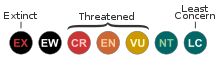
IUCN Red List of Threatened Plants Status : Not listed.
Growth: S = slow M = medium F = fast. Soil: L = light (sandy) M = medium H = heavy (clay). pH: A = acid N = neutral B = basic (alkaline). Shade: F = full shade S = semi-shade N = no shade. Moisture: D = dry M = Moist We = wet Wa = water.
Now available:
Food Forest Plants for Mediterranean Conditions
350+ Perennial Plants For Mediterranean and Drier Food Forests and Permaculture Gardens.
[Paperback and eBook]
This is the third in Plants For A Future's series of plant guides for food forests tailored to
specific climate zones. Following volumes on temperate and tropical ecosystems, this book focuses
on species suited to Mediterranean conditions—regions with hot, dry summers and cool, wet winters,
often facing the added challenge of climate change.
Read More
Expert comment
Author
Gray.
Botanical References
71200
Links / References
For a list of references used on this page please go here
Readers comment
| Add a comment |
|
If you have important information about this plant that may help other users please add a comment or link below. Only comments or links that are felt to be directly relevant to a plant will be included. If you think a comment/link or information contained on this page is inaccurate or misleading we would welcome your feedback at [email protected]. If you have questions about a plant please use the Forum on this website as we do not have the resources to answer questions ourselves.
* Please note: the comments by website users are not necessarily those held by PFAF and may give misleading or inaccurate information.
|
|