 |
|
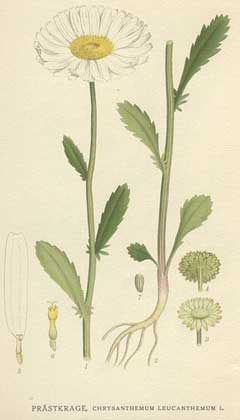
http://commons.wikimedia.org/wiki/File:Chrysanthemum_leucanthemum.jpg |
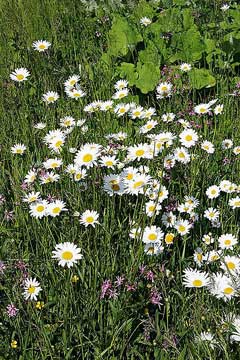 |
| http://commons.wikimedia.org/wiki/User:Prazak |
Translate this page:
Summary
Oxeye daisy is a familiar European wildflower that has become naturalised throughout much of North America. Although widely regarded as an invasive pasture weed, it is also an excellent edible plant. The young leaves, flowers, and roots can all be eaten, with the foliage making particularly good salad greens or cooked vegetables. Related species are widely cultivated in Asia as leafy vegetables or grown commercially for chrysanthemum tea, suggesting that oxeye daisy has far greater food potential than is generally recognised. Bloom Color: White. Main Bloom Time: Early summer, Mid summer. Form: Upright or erect.
Physical Characteristics

 Chrysanthemum leucanthemum is a PERENNIAL growing to 0.6 m (2ft) by 0.3 m (1ft in) at a medium rate.
See above for USDA hardiness. It is hardy to UK zone 3 and is not frost tender. It is in flower from June to August. The species is hermaphrodite (has both male and female organs) and is pollinated by Bees, flies, beetles, Lepidoptera (Moths & Butterflies). The plant is self-fertile.
Suitable for: light (sandy), medium (loamy) and heavy (clay) soils and prefers well-drained soil. Suitable pH: neutral and basic (mildly alkaline) soils. It cannot grow in the shade. It prefers moist soil. The plant can tolerates strong winds but not maritime exposure.
UK Hardiness Map
US Hardiness Map
Synonyms
Chrysanthemum leucanthemum.
Plant Habitats
Edible Uses
Oxeye daisy is one of the more surprising edible members of the sunflower family. Despite its reputation as an invasive weed, it provides pleasant salad greens, useful cooked vegetables, and attractive herbal tea. Combined with its abundance across much of North America and its long history of culinary use among related species in Asia, it deserves greater recognition as a worthwhile wild edible plant [2-3]. The roots, leaves, and flowers are edible fresh or cooked [2-3]. Young leaves are the most useful part of the plant and are excellent in salads or cooked as a potherb. The flowers are also edible and can be used fresh or brewed into tea. Stems are technically edible but are generally too fibrous to be worthwhile [2-3]. Edibility Rating: 4 out of 5 – A versatile edible wildflower with excellent leaves and flowers, although the relatively small foliage means gathering a meal requires some time [2-3]. Taste and Preparation: Fresh leaves have a mild, pleasantly resinous flavor with a subtle fruity note. They make excellent salad greens and lack the strong bitterness found in many members of the sunflower family. Fresh flowers are similarly pleasant, although the green bracts beneath the flower heads can have a slightly scratchy texture. Stems may be chewed for moisture and nourishment but are usually too fibrous to eat regularly. Cooked leaves produce a rich green broth ideal for soups and stews. Unlike many wild greens, they do not require changes of cooking water, as they retain a mild flavor after boiling. Fresh flowers also make an attractive pale yellow herbal tea with a distinctive flavor that differs from the leaves. Related species are widely used to prepare chrysanthemum tea throughout Asia [2-3]. Seasonality (Phenology): Oxeye daisy flowers primarily during late spring and summer, although flowering periods vary with climate. Gather young leaves in spring and early summer, and use flowers throughout the blooming season [2-3]. Nutritional Value: The leaves provide vitamins A and C, minerals, dietary fiber, and antioxidants typical of leafy greens. Like many members of the daisy family, the plant also contains beneficial polyphenols and aromatic compounds. Traditional Uses: Although Native Americans in the Southwest did not widely use it because it was rarely found there, Europeans have long eaten oxeye daisy as a wild green. Closely related chrysanthemums are important food plants throughout East Asia, where they are cultivated as leafy vegetables and valued for their flowers, which are used to prepare traditional chrysanthemum tea [2-3]. Safety: Oxeye daisy is generally considered safe to eat. Some individuals may experience allergic reactions similar to those caused by other members of the daisy family. The seeds contain small amounts of naturally occurring pyrethrins, but these compounds readily break down through cooking, light exposure, and air exposure. As with all members of the Asteraceae, people with known allergies to daisies, chrysanthemums, or ragweed should consume it cautiously. Leaves - raw or cooked[2, 115]. The young spring shoots are finely chopped and added to salads[4, 7, 183]. Rather pungent[9], they should be used sparingly or mixed with other salad plants[183]. Root - raw[5]. Used in spring[207].
References More on Edible Uses
Medicinal Uses
Plants For A Future can not take any responsibility for any adverse effects from the use of plants. Always seek advice from a professional before using a plant medicinally.
The whole plant, and especially the flowers[7], is antispasmodic, antitussive, diaphoretic, diuretic, emmenagogue, tonic and vulnerary[4, 7, 21]. It is harvested in May and June then dried for later use[4]. The plant has been employed successfully in the treatment of whooping cough, asthma and nervous excitability[4]. Externally it is used as a lotion on bruises, wounds, ulcers and some cutaneous diseases[4, 7]. A decoction of the dried flowers and stems has been used as a wash for chapped hands[257]. A distilled water made from the flowers is an effective eye lotion in the treatment of conjunctivitis[7].
References More on Medicinal Uses
The Bookshop: Edible Plant Books
Our Latest books on Perennial Plants For Food Forests and Permaculture Gardens in paperback or digital formats.
Edible Tropical Plants
Food Forest Plants for Hotter Conditions: 250+ Plants For Tropical Food Forests & Permaculture Gardens.
More
Edible Temperate Plants
Plants for Your Food Forest: 500 Plants for Temperate Food Forests & Permaculture Gardens.
More
More Books
PFAF have eight books available in paperback and digital formats. Browse the shop for more information.
Shop Now
Other Uses
Groundcover and Specialist Nectary. Landscape Uses: Groundcover, Massing. Special Features: Invasive, Naturalizing, Attracts butterflies, Suitable for cut flowers.The flowers provide abundant nectar and pollen for insects, and birds occasionally eat the seeds. Dense colonies also provide shelter for numerous invertebrates.
Special Uses
References More on Other Uses
Cultivation details
Oxeye daisy thrives in full sun or partial shade and grows well in a wide variety of soils, particularly well-drained grasslands and disturbed ground. It tolerates drought once established but performs best with moderate soil moisture. Habitat: Occurs in meadows, pastures, roadsides, disturbed ground, open woodlands, and grasslands throughout much of North America. In the Southwest, it is largely confined to cooler mountain regions, such as Arizona's Mogollon Rim. USDA Hardiness Zones: USDA Zones 3–8. Growth Rate: Moderate to fast. Plants spread steadily by both seed and creeping rhizomes, often forming persistent colonies. Mature Size: Typically 20–70 cm (8–28 in) tall. Cultivation: Oxeye daisy grows easily from seed or by division and needs little maintenance. Because it can be invasive, consider cultivation carefully; some regions may discourage or prohibit it. Pollinators: The flowers attract a wide range of bees, hoverflies, butterflies, beetles, and other beneficial insects, making the plant valuable for pollinator conservation. Identification: Oxeye daisy is an upright perennial arising from creeping rhizomes. It bears spoon-shaped to oblanceolate leaves with toothed or lobed margins and solitary flower heads with bright yellow centers surrounded by white ray florets. The fruits are ribbed cypselae lacking a pappus. Its classic white-and-yellow flower heads make it one of the easiest wildflowers to recognize. Similar Species: Oxeye daisy resembles several ornamental daisies and other white-rayed members of the sunflower family. It can be distinguished by its single flower heads on long stems, toothed spoon-shaped leaves, and creeping rhizomes. Related chrysanthemums are also edible and share many culinary uses. Easily grown in good garden soil in a sunny position[187]. Prefers a rich soil[17]. Plants are hardy to at least -20°c[187]. The whole plant is permeated with an acrid juice, making it obnoxious to insects[4]. The flowers have a smell like stale perspiration[245]. Grows well in the summer meadow but may need some help in maintaining itself[24]. In garden design, as well as the above-ground architecture of a plant, root structure considerations help in choosing plants that work together for their optimal soil requirements including nutrients and water. The root pattern is rhizomatous with underground stems sending roots and shoots along their length [2-1].
References Carbon Farming Information and Carbon Sequestration Information
Temperature Converter
Type a value in the Celsius field to convert the value to Fahrenheit:
Fahrenheit:
The PFAF Bookshop
Plants For A Future have a number of books available in paperback and digital form. Book titles include Edible Plants, Edible Perennials, Edible Trees,Edible Shrubs, Woodland Gardening, and Temperate Food Forest Plants. Our new book is Food Forest Plants For Hotter Conditions (Tropical and Sub-Tropical).
Shop Now
Plant Propagation
Seed - sow spring in a greenhouse. When they are large enough to handle, prick the seedlings out into individual pots and plant them out in the summer. Division in spring or autumn. Larger clumps can be replanted direct into their permanent positions, though it is best to pot up smaller clumps and grow them on in a cold frame until they are rooting well. Plant them out in the spring. Basal cuttings in spring. Harvest the shoots when they are about 10cm long with plenty of underground stem. Pot them up into individual pots and keep them in light shade in a cold frame or greenhouse until they are rooting well. Plant them out in the summer.
Other Names
If available other names are mentioned here
Oxeye daisy, moon daisy, moon penny.
Native Range
TEMPERATE ASIA: Armenia EUROPE: United Kingdom, Ireland, Austria, Belgium, Switzerland, Czech Republic, Germany, Hungary, Poland, Slovakia, Russian Federation (European part), Belarus, Estonia, Lithuania, Latvia, Moldova, Ukraine (incl. Krym), Bosnia and Herzegovina, Greece, Croatia, Italy, North Macedonia, Montenegro, Serbia, Slovenia, France, Portugal
Weed Potential
Right plant wrong place. We are currently updating this section.
Please note that a plant may be invasive in one area but may not in your area so it's worth checking.
High. Oxeye daisy is considered invasive in many parts of North America and several other countries. It spreads aggressively by seed and rhizomes, reducing forage quality in pastures and competing with native vegetation.
Conservation Status
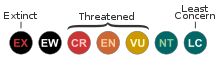
IUCN Red List of Threatened Plants Status : Not listed.
| Related Plants
|
| Latin Name | Common Name | Habit | Height | Hardiness | Growth | Soil | Shade | Moisture | Edible | Medicinal | Other |
| Artemisia vulgaris | Mugwort, Common wormwood, Felon Herb, Chrysanthemum Weed, Wild Wormwood | Perennial | 1.2 |
3-9
| F | LMH | SN | DM | 2 | 3 | 3 |
| Chrysanthemum carinatum | Tricolor Chrysanthemum, Painted Daisy, Summer Chrysanthemum | Annual | 0.6 |
0-0
| F | LMH | SN | M | 2 | 0 | |
| Chrysanthemum coronarium | Chop-Suey Greens | Annual | 1.2 |
0-0
| | LMH | SN | M | 3 | 2 | 2 |
| Chrysanthemum coronarium spatiosum | Chop-Suey Greens | Annual | 1.2 |
0-0
| | LMH | SN | M | 3 | 2 | 2 |
| Chrysanthemum marshallii | | Perennial | 0.0 |
-
| | LMH | SN | M | 0 | 0 | 3 |
| Chrysanthemum segetum | Corn Marigold | Annual | 0.5 |
-
| | LMH | SN | M | 1 | 0 | |
| Dendranthema indicum | Chrysanthemum | Perennial | 0.6 |
5-9
| | LMH | N | M | 2 | 3 | 1 |
| Dendranthema x grandiflorum | Chrysanthemum, Cut Mum, Garden Mum, Pot Mum, Florist's Chrysanthemum | Perennial | 1.5 |
5-10
| M | LMH | N | M | 2 | 3 | 2 |
| Leucanthemum maximum | Shasta Daisy, Max chrysanthemum | Perennial | 0.8 |
5-9
| | LMH | N | M | 0 | 0 | |
|
Growth: S = slow M = medium F = fast. Soil: L = light (sandy) M = medium H = heavy (clay). pH: A = acid N = neutral B = basic (alkaline). Shade: F = full shade S = semi-shade N = no shade. Moisture: D = dry M = Moist We = wet Wa = water.
Now available:
Food Forest Plants for Mediterranean Conditions
350+ Perennial Plants For Mediterranean and Drier Food Forests and Permaculture Gardens.
[Paperback and eBook]
This is the third in Plants For A Future's series of plant guides for food forests tailored to
specific climate zones. Following volumes on temperate and tropical ecosystems, this book focuses
on species suited to Mediterranean conditions—regions with hot, dry summers and cool, wet winters,
often facing the added challenge of climate change.
Read More
Expert comment
Author
Lam.
Botanical References
17200
Links / References
For a list of references used on this page please go here
Readers comment
| Add a comment |
|
If you have important information about this plant that may help other users please add a comment or link below. Only comments or links that are felt to be directly relevant to a plant will be included. If you think a comment/link or information contained on this page is inaccurate or misleading we would welcome your feedback at [email protected]. If you have questions about a plant please use the Forum on this website as we do not have the resources to answer questions ourselves.
* Please note: the comments by website users are not necessarily those held by PFAF and may give misleading or inaccurate information.
|
Subject : Chrysanthemum leucanthemum
|
|
|
|